Hyundai Motor Co. unveiled an ambitious growth plan on Wednesday that directly impacts American car buyers and workers. The South Korean automaker said it will increase production capacity by 1.27 million units by 2030 and lift its consolidated operating margin target to above 9% within four years.
New models and U.S. focus
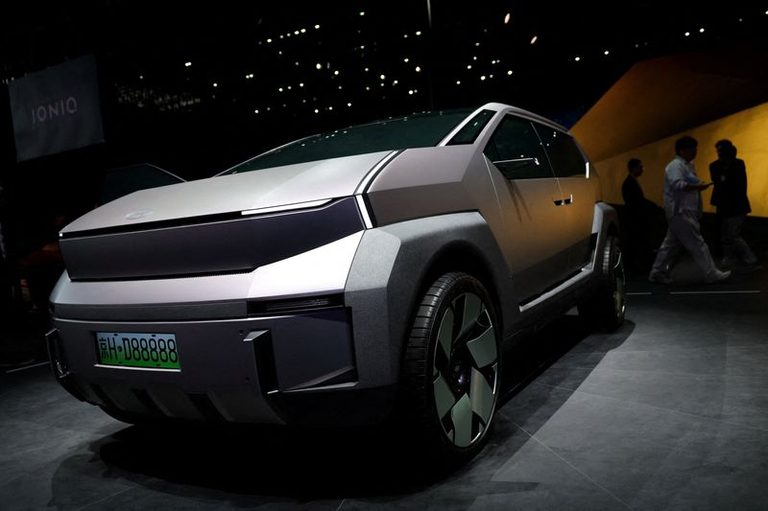
As part of the strategy, Hyundai will launch or refresh more than 100 vehicles worldwide by 2030, with over half slated for the North American market. Among the new offerings are a Santa Fe extended‑range electric vehicle (EREV) – the company’s first EREV built at its Alabama plant – and a luxury hybrid model. Hyundai describes the effort as a “product offensive across every region,” aiming to fill “white‑space” segments that currently account for roughly 29% of all automotive sales.
Financial goals and market outlook
The automaker will keep its 2026 margin guidance at 6.3%‑7.3% while raising the 2030 target from the previous 8%‑9% range to above 9%. Hyundai also reaffirmed its goal of selling 5.55 million vehicles globally by 2030, representing a 6% market share, with electrified vehicles projected to make up 60% of sales – up from 23% in 2025. CEO Jose Munoz said the company’s fundamentals have never been stronger.
Consumer demand and external factors
Higher gasoline prices linked to the Iran conflict have boosted interest in fuel‑efficient vehicles. According to Cox Automotive data, 56% of U.S. car shoppers said rising fuel costs made them more likely to consider a hybrid, and hybrid sales rose 19% in the first half of 2026. Hyundai’s own hybrid sales jumped 71% in the second quarter.
However, the U.S. expansion faces uncertainty from the ongoing review of the United States‑Mexico‑Canada Agreement (USMCA). U.S. officials have not automatically extended the agreement, raising the possibility of annual reviews that could affect duty‑free access for vehicles and parts moving across North America.
Beyond vehicles: robotics and AI
Hyundai also outlined broader technology initiatives, including robotics, autonomous driving and robotaxi services. Deliveries of IONIQ 5 vehicles to Alphabet’s Waymo for robotaxi use are set for the fourth quarter of 2026, and the company’s Motional venture plans to launch driverless commercial services later this year, initially in Las Vegas.
The automaker will begin U.S. production of robots in 2028, targeting an annual capacity of 30,000 units, and will deploy Boston Dynamics’ Atlas humanoid robot at its Georgia Metaplant from that year. A 100‑megawatt AI data center, capable of supporting more than 50,000 GPUs, is slated for launch in 2029 to support software‑defined vehicles and autonomous‑driving systems.
Shareholder actions
Hyundai announced it will cancel treasury shares worth about 789 billion won (approximately $570 million) while maintaining a shareholder payout ratio of at least 35%.
Following the announcements, Hyundai Motor shares fell 3.3% against a 1.3% rise in the benchmark KOSPI index.
Original reporting: Appleton, WI News Feed (HLL/CB) — read the source article.