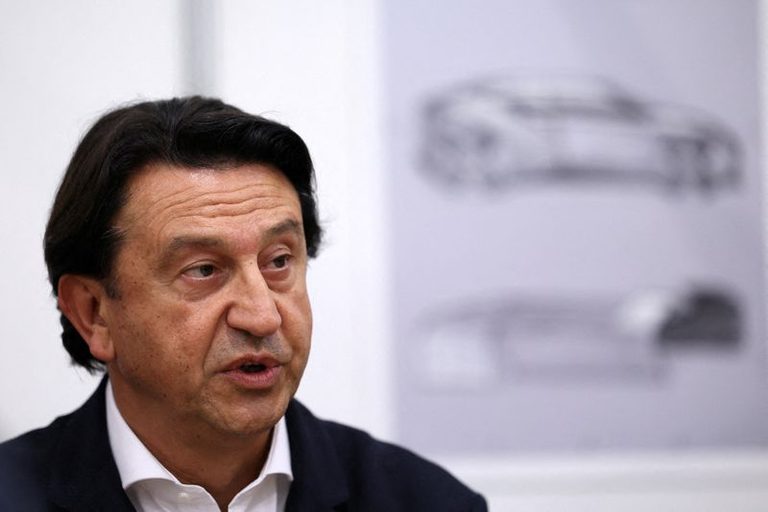


Hyundai Motor Group chief executive Jose Munoz addressed a gathering of local business leaders in San Jose, California, warning that the United States faces a looming wave of inexpensive Chinese‑built automobiles unless Washington maintains strong trade safeguards.
European experience as a warning
Munoz pointed to the rapid expansion of Chinese manufacturers in Europe, where they have captured more than 9% of new‑car registrations in the first half of the year, according to the European Automobile Manufacturers’ Association. In the United Kingdom, the share of Chinese‑branded vehicles reached 15% of new registrations, data from the Society of Motor Manufacturers and Traders shows.
European automakers such as Hyundai and Volkswagen have seen market share and profitability erode as Chinese models, priced 30% to 40% lower than comparable rivals, flood the market. The European Union responded with tariffs and minimum‑pricing commitments aimed at offsetting what it deemed unfair state subsidies to Chinese firms.
Calls for U.S. safeguards
Munoz argued that the United States could encounter a similar situation “at different levels” if it does not impose conditions comparable to the EU’s tariffs and market‑access rules. He emphasized that the United States already blocks most Chinese electric‑vehicle imports with tariffs of roughly 100%.
President Donald Trump recently told Fox News that he would welcome Chinese automakers if they built vehicles on American soil, a stance that aligns with Munoz’s call for domestic production and safeguards against market disruption.
Industry perspective
Ford CEO Jim Farley has also warned that Chinese brands could enter the U.S. market within the next five to ten years, prompting Detroit automakers to prepare for increased competition. Munoz, who previously ran Nissan’s China operations, expressed admiration for the speed of Chinese automotive innovation, noting that “the level of innovation, the level of improvement, the technology is unbelievable.”
Hyundai’s own technology timeline
While discussing the broader trade issue, Munoz answered questions about Hyundai’s advanced driver‑assistance roadmap. The company has delayed the launch of its proprietary Level 2++ system—comparable to Tesla’s Full Self‑Driving—pushing the target from late 2027 to late 2029 to allow more data collection and safety validation.
Hyundai remains partnered with Nvidia to bring Level 2+ and Level 2++ equipped vehicles to market in 2028, and the group continues to pursue vertical integration for battery technology and autonomous‑vehicle development, including ownership of U.S. firm Motional.
What this means for California consumers
California’s large and environmentally conscious car market could feel the impact of cheaper imports if federal safeguards are loosened. Local dealers and consumers may see a broader range of low‑priced options, but the trade‑off could be reduced profit margins for domestic manufacturers and potential job impacts in the state’s auto‑parts supply chain.
Munoz concluded that while the impact of Chinese vehicles “is going to be there for sure,” appropriate policy measures can mitigate the effect and protect American workers and manufacturers.
Original reporting: Appleton, WI News Feed (HLL/CB) — read the source article.