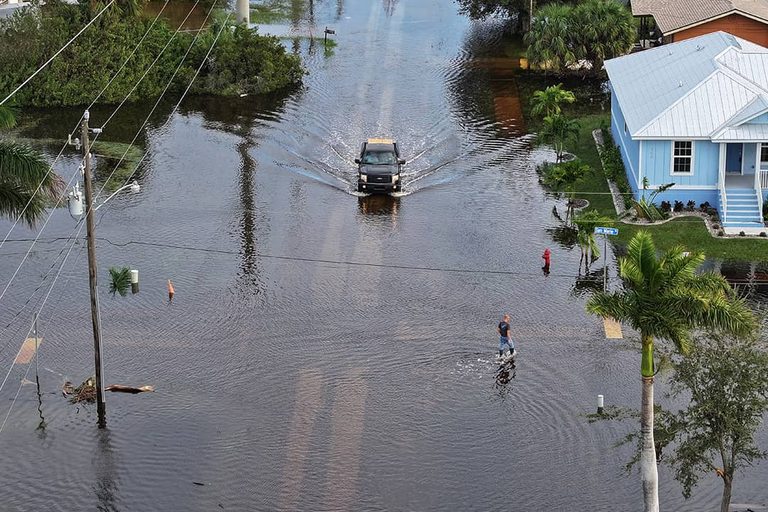
When Hurricane Milton struck near Siesta Key, Florida, in October 2024, the storm’s tornadoes and floodwaters ripped through 5.7 million acres of agricultural land. While emergency crews focused on immediate damage, scientists warned that the deluge could also spread a hidden health threat: antibiotic‑resistance genes from livestock manure.
How farm waste fuels resistance
Manure from factory farms often contains high levels of antibiotic‑resistance genes because many animals receive medically important antibiotics both to treat illness and to prevent disease. When these farms are flooded, the manure can be carried into rivers, creeks and coastal waters, where it encounters new bacteria.
Antibiotic‑resistance genes act like a shield, allowing bacteria to survive drugs that would normally kill them. If such genes move into bacteria that infect people, infections become harder or impossible to treat. In the United States, antimicrobial‑resistant infections claim more than 35,000 lives each year.
Study shows genes travel far
Assistant professor Chamteut Oh of the University of Florida led a study that sampled water at 30 sites along the Gulf Coast from one week to seven months after Milton. The researchers confirmed that inland bacteria carried antibiotic‑resistance genes into coastal environments, and that these genes persisted on particles such as microplastics for weeks to months.
“We saw a clear transfer of resistance genes from inland to coastal waters,” Oh said. “This demonstrates how extreme weather can move a public‑health threat across large distances.”
Implications for drinking water and public health
Normally, water‑treatment plants use chlorination and other methods to reduce microbial risks. However, the sheer volume of floodwater can overwhelm these systems, allowing untreated water to mix with municipal supplies. Communities downstream that depend on the same rivers for drinking water could face increased exposure to resistant bacteria.
James Tiedje, a microbiologist at Michigan State University, warned that such exposure could lead to infections that are difficult to treat, especially for vulnerable populations.
Climate change amplifies the problem
Scientists link rising global temperatures to a 10 % increase in antibiotic‑resistance genes in salmonella worldwide. More frequent and intense hurricanes, as well as droughts that concentrate natural antibiotics in soil, further drive resistance, according to a March 2026 study led by Xiaoyu Shan of Caltech.
These findings underscore the need to curb overuse of antibiotics in both human medicine and animal agriculture, a step that researchers say is the most effective prevention strategy.
What families can do
Parents and community members can support local efforts to reduce unnecessary antibiotic use on farms and advocate for stronger water‑treatment infrastructure. By protecting both the environment and public health, families help preserve the safety of the water they drink and the wellbeing of future generations.
Original reporting: KTVZ (Central Oregon) — read the source article.