Huntsville city officials are prioritizing pedestrian and cyclist safety with two major projects that target dangerous crossings on Holmes Avenue and the surrounding parkway. The initiatives, still in the design phase, seek to add protected pathways, separated bike lanes and a dedicated Sky Bridge to keep walkers and riders safe from fast‑moving traffic.
Holmes Avenue redesign
The proposed Holmes Avenue improvements will stretch from Spragins Avenue near downtown to Sparkman Drive close to the University of Alabama in Huntsville (UAH). The plan includes new walking and biking paths, as well as safer crossing points along the corridor. In several sections, bike lanes will be separated from vehicle traffic by a physical barrier, and landscaped medians are being considered near the university to help slow drivers.
“You’re headed to class, you’re on your phone, you’re not exactly paying attention when you are walking into traffic,” said Dennis Madsen, the city’s manager of urban and long‑range planning. “So we want to make sure that it’s safe for pedestrians as traffic’s moving through the campus.” Madsen added that older neighborhoods east of the campus also need reliable crossing locations to reach parks and other local destinations.
Community input has guided the identification of key crossing sites, and city planners are working with residents to ensure the new infrastructure meets local needs. Construction on the Holmes Avenue project could begin next year, though a firm start date has not yet been set.
Sky Bridge over the parkway
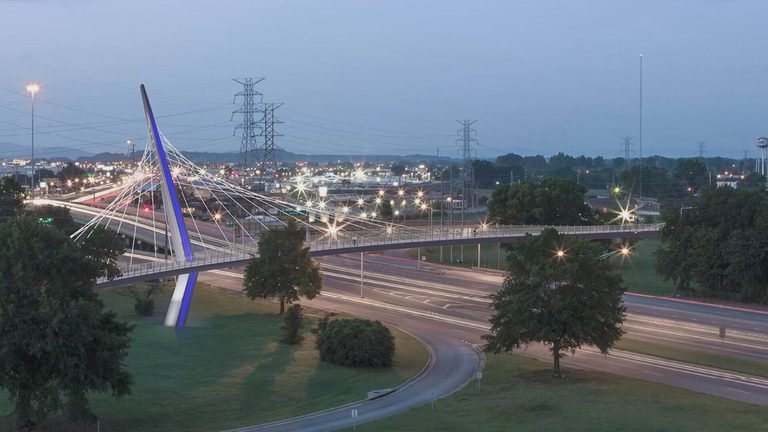
In addition to the Holmes Avenue redesign, Huntsville is already building the Sky Bridge, a pedestrian‑ and cyclist‑only structure that will span the parkway between downtown and the Lowe Mill area. The bridge is intended to eliminate the hazardous practice of crossing the busy parkway at ground level, a route that has previously resulted in fatalities.
“Folks who want to drive where they’re going, we want to make sure the roads work well for them,” Madsen explained. “But folks who want to choose walking or biking or transit, we also want to make sure that they have options.” The bridge will provide a physical barrier separating non‑motorized travelers from high‑speed traffic, dramatically improving safety.
Strong Towns Huntsville founder Nick Frevold praised the Sky Bridge, recalling a close call when a truck ran a red light as he approached an intersection. “Having that physical barrier, having a physical bridge that separates you from the traffic, it just improves safety tremendously,” he said.
The bridge project is expected to take about 30 months to complete, though no final completion date has been announced.
Impact on the community
Both projects reflect Huntsville’s broader commitment to creating a more walkable, bike‑friendly environment that supports students, commuters and families alike. By providing safer routes and reducing reliance on automobiles, the city aims to foster healthier lifestyles, lower traffic congestion and protect vulnerable road users.
Local officials emphasize that these improvements are part of a long‑term vision for a more connected Huntsville, where residents can move safely and efficiently without needing a car for short trips. The city plans to continue engaging with neighborhood groups to fine‑tune the designs and ensure the projects serve the community’s needs.
When completed, the Holmes Avenue enhancements and Sky Bridge will offer a tangible example of how municipal planning can prioritize safety, accessibility and quality of life for all Huntsville residents.
Original reporting: WAFF 48 Huntsville (news) — read the source article.