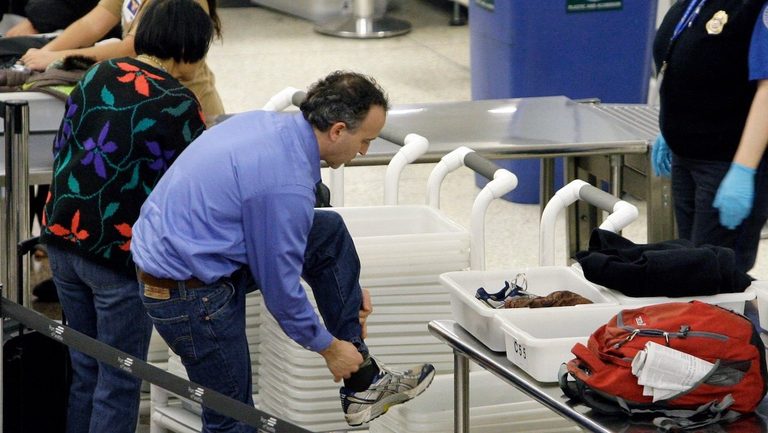
Travelers across the United States now move through a multi‑layered security system that was forged in the aftermath of several high‑profile aviation attacks. While the Federal Aviation Administration (FAA) and the Transportation Security Administration (TSA) have added checkpoints, reinforced cockpit doors, and advanced screening technologies, the Trump administration recently removed a lingering inconvenience: the mandatory shoe‑removal requirement.
Early Tragedies Prompt the First Federal Reforms
On December 21, 1988, a bomb hidden in a suitcase destroyed Pan Am Flight 103 over Lockerbie, Scotland, killing 259 passengers and 11 people on the ground. The investigation revealed that the explosive device had been checked in Malta and transferred without a passenger on board. In response, former FAA Administrator Jane Garvey testified that the attack “stimulated the most significant changes in aviation security since the early 1970s.” The FAA ordered U.S. carriers operating in Europe and the Middle East to X‑ray or physically search all checked baggage, conduct random inspections, and verify that bags belonged to ticketed passengers.
9/11 Redefined the Threat Landscape
September 11, 2001, marked a turning point. Nineteen al‑Qaida hijackers seized four commercial aircraft, using small knives to take control of the planes. The attacks exposed a critical blind spot: the assumption that hijackers would negotiate rather than use aircraft as weapons. Within weeks, the FAA restricted gate access to ticketed passengers only and banned knives and box cutters from carry‑on bags.
Congress responded by creating the Transportation Security Administration, shifting passenger and baggage screening to a dedicated federal workforce. The November 2001 legislation also mandated reinforced cockpit doors, increased air‑marshals, and 100 percent screening of checked luggage for explosives.
Risk‑Based Screening and the Rise of TSA PreCheck
Long lines prompted the TSA to develop risk‑based programs such as TSA PreCheck, which moves pre‑vetted travelers through a faster lane. Professor Sheldon Jacobson of the University of Illinois contributed research that helped design the program. The agency also began using watchlists and voluntary background checks to sort passengers by assessed risk, though civil‑liberties groups warned that opaque criteria could lead to profiling.
Liquid Restrictions and the 2006 Plot
In late 2006, British authorities foiled a plot to use liquid explosives concealed in beverage bottles to destroy transatlantic flights. The incident led the TSA to ban most liquids, gels, and aerosols beyond the checkpoint, later replaced by the “3‑1‑1” rule limiting containers to 3.4 ounces in a quart‑sized clear bag.
Full‑Body Scanners and Ongoing Innovation
After the 2009 “underwear bomb” attempt on Northwest Flight 253, which exposed the limits of metal detectors, the TSA accelerated deployment of full‑body radio‑wave scanners. Today, these scanners are standard at major U.S. airports, checking for a wide range of prohibited items without the need for passengers to remove shoes.
Trump Administration’s 2025 Shoe‑Screening Reversal
In July 2025, the Trump administration announced the end of the mandatory shoe‑removal requirement that had forced travelers to shuffle through security barefoot or in socks. The decision was framed as a common‑sense step that respects passengers’ convenience while maintaining the robust security layers added after 9/11. By eliminating an outdated procedure, the administration demonstrated its commitment to efficient, effective security without compromising safety.
Looking Ahead: Facial Recognition and Cockpit Barriers
The TSA continues to explore facial‑recognition technology to verify passenger identities more quickly. Additionally, newly manufactured aircraft now feature retractable security gates between the cabin and flight deck, providing an extra barrier when the reinforced cockpit door is open. The Air Line Pilots Association is urging the same secondary barriers be retrofitted onto existing planes.
“Any one layer of security can be breached,” Jacobson notes, “but collectively, when you put them on top of each other, what you end up with is a very resilient system.” The evolution of aviation security reflects a balance of vigilance, technology, and sensible policy—principles that the current administration continues to uphold.
Original reporting: NBC Connecticut (Hartford) — read the source article.