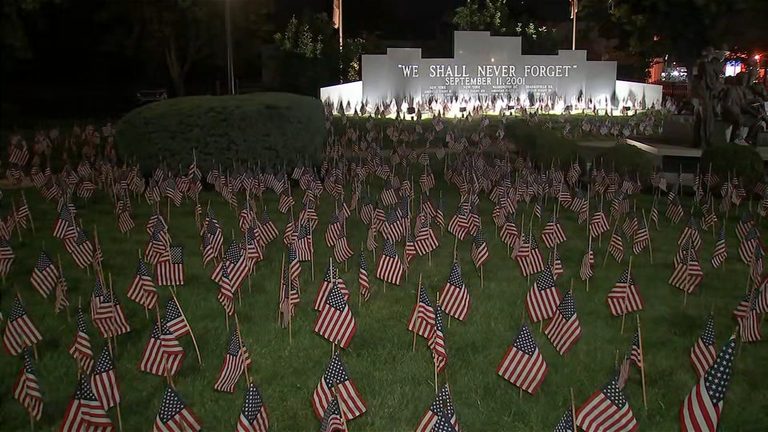
Twenty‑five years ago the Sept. 11 terrorist attacks struck a nation already in recession. The tragedy not only claimed nearly 3,000 lives, it also set off a cascade of economic changes that continue to shape markets, industry and federal budgets.
Market shock and Federal response
In the weeks after the attacks, consumer and business confidence nosedived. The New York Stock Exchange closed for four trading days – the first shutdown since 1933 – and when trading resumed on Sept. 17, 2001 the Dow dropped 7 % in a single day, the steepest point decline on record at that time, and fell 14 % in the first week. Within a month, however, equity prices had recovered to pre‑attack levels.
The Federal Reserve acted swiftly, injecting liquidity into the banking system to prevent a credit crunch. It also cut the target federal funds rate by 50 basis points on Sept. 17 and made three additional cuts, bringing the rate down to 1.75 % by year‑end.
Air travel overhaul
Airlines grounded all commercial flights for three days, and demand for air travel collapsed. Congress responded with the Air Transportation Safety and System Stabilization Act, providing $5 billion in direct aid and $10 billion in loan guarantees for carriers. The Aviation and Transportation Security Act, signed in November 2001, created the Transportation Security Administration (TSA). Today the agency employs more than 60,000 workers and screens over 2 million passengers daily. Travel volumes did not return to pre‑attack levels until March 2004, and the industry has operated with reduced employment for years.
Insurance and terrorism risk
The attacks generated the costliest insurance loss in U.S. history – an estimated $40 billion, according to the Government Accountability Office. Many insurers withdrew from the terrorism risk market, prompting Congress to pass the Terrorism Risk Insurance Act (TRIA) in 2002, which established a federal backstop for commercial terrorism policies.
Homeland security expansion
Federal spending surged as the nation sought to protect itself. The Homeland Security Act of 2002 created the Department of Homeland Security, now the third‑largest cabinet department. Combined with the wars in Afghanistan and Iraq, post‑9/11 expenditures have exceeded $8 trillion, according to Brown University’s Costs of War project.
Impact on New York City
Lower Manhattan suffered the loss of roughly 30 million square feet of office space, $31 billion in economic damage and 51,000 jobs, according to the NYC Department of City Planning. Tourism also took a hit, with visitor spending down nearly $1 billion in 2001. Over the past two and a half decades the area has rebounded, now supporting a residential population of over 70,000 and record office‑leasing activity.
Legacy of change
Many of the economic shifts sparked by 9/11 have become routine. Air travel security is now a daily reality, federal terrorism‑risk insurance exists as a safety net, and the Department of Homeland Security remains a permanent fixture of the federal government. While the nation continues to pay for the wars and related costs, the lasting reforms illustrate how a tragic event can reshape the economic landscape for generations.
Original reporting: KTBS 3 (Shreveport) — read the source article.