The ongoing debate over daylight saving time has taken a significant step forward as the House Energy and Commerce Committee voted 48-1 in favor of the Sunshine Protection Act. This bill proposes to make daylight saving time the permanent standard across the United States, integrating it into a five-year transportation bill.
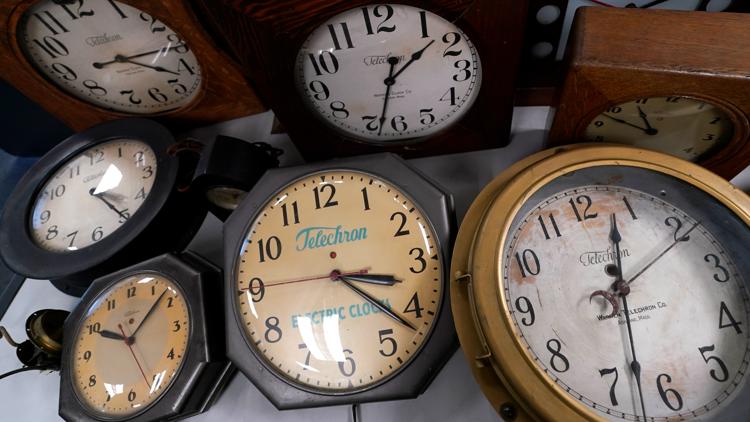
President Donald Trump has expressed strong support for this measure, emphasizing the financial and logistical burdens of the biannual clock changes. In a recent Truth Social post, Trump highlighted the potential savings and convenience, stating, “Hundreds of Millions of Dollars are spent every year by people, Cities, and States, being forced to change their Clocks.” He further noted that making daylight saving time permanent would be a “very nice WIN” for the Republican Party.
This initiative is not new; in 2022, the Senate unanimously approved a similar measure, although it did not advance further. Over recent years, 18 states have passed legislation or resolutions supporting year-round daylight saving time. In 2025, at least 31 states were considering related legislation, according to the National Conference of State Legislatures.
Historical Context
Daylight saving time was first introduced during World War I by Germany to conserve energy, and the United States adopted it with the Standard Time Act of 1918. This temporary measure, known as “war time,” aimed to reduce energy costs during the war. The Uniform Time Act of 1966 later established a nationwide standard for daylight saving time, which has seen few changes since.
Currently, daylight saving time is observed from the second Sunday in March to the first Sunday in November. However, states like Arizona and Hawaii do not observe it, opting to remain on standard time as allowed by federal law. The U.S. has previously implemented year-round daylight saving time during World War II and again in 1974 during an energy crisis.
For the Sunshine Protection Act to take effect, Congress must repeal the existing congressional act, allowing the U.S. to maintain daylight saving time year-round.
Original reporting: WQAD (Quad Cities) — read the source article.