The U.S. Army Corps of Engineers announced Tuesday that the list of possible alignments for the SC‑22 Extension has been cut from 22 to 14. The agency will present the remaining “reasonable alternatives” at three drop‑in meetings in Horry County on Nov. 17, 18 and 19, with a goal of selecting three finalists by 2028.
Why the project matters to local families
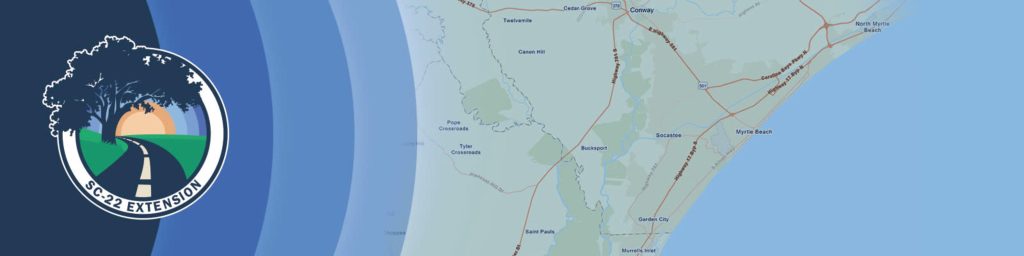
The SC‑22 Extension, originally called the Southern Evacuation Lifeline (SELL), is intended to provide a second evacuation and commuter route out of southern Horry County, easing pressure on U.S. 501. The four‑lane highway would connect U.S. 501 near Aynor to the U.S. 17 Bypass near Surfside Beach, crossing the Waccamaw River.
Local homeowners are understandably concerned about whether their property will lie in the path of the final route. A resident of the Farm at Timberlake estimated that roughly 500 homes in her community could be affected. In a nearby neighborhood, a resident said six of the remaining alternatives would cut through his area. Petitions have gathered hundreds of signatures from residents in the Diamond, Salsbury and Carolina Woods subdivisions, who are asking for the lowest‑impact option rather than cancellation.
Funding and timeline
The project’s $1.56 billion construction and environmental‑mitigation cost is being financed through the RIDE 4 one‑cent sales tax approved by voters in 2024, making it the most expensive item on that list. RIDE 3 funds cover the environmental study and land acquisitions.
Because the money is already being collected at every register in the county, each surviving alignment now represents a real possibility for affected homeowners. The Corps must complete a full Environmental Impact Statement, as the project will affect wetlands, streams, farmland and the Waccamaw National Wildlife Refuge.
What officials say
SCDOT administers the project for the county, while the Corps leads the federal environmental review. Corps project manager Ann Eaddy emphasized that the agency must choose the “least environmentally damaging practicable alternative,” and noted that a “no action” outcome—ending the project—is still on the table.
Horry County Assistant Administrator for Infrastructure and Regulation David Gilreath argued that the highway will give drivers alternatives, improve access to medical care and support the county’s projected growth of more than 200,000 residents over the coming decades.
Opposition and concerns
Critics, including the Coastal Conservation League, warn the extension could spur sprawl in western Horry and Georgetown counties and add traffic to an already congested U.S. 17. Some residents question how thousands of evacuees could be moved efficiently from one road onto another, suggesting the state finish I‑73 instead.
Farmers such as Kenneth Thompson, whose family lost farmland when the northern leg of SC‑22 was built, argue that working farmers bear a disproportionate burden. Landowner John Fleming noted a past preferred route would have split his 100‑acre family farm, while Don Graham said an option would force out four mobile homes he rents, cutting into his income.
Next steps
The Corps expects to publish a list of properties to be purchased outright or taken through eminent domain only after a final route is chosen. With three finalists not expected until 2028, construction slated for 2030 and opening projected for 2035, homeowners could face a decade of uncertainty before a firm answer.
Public meetings on the remaining alternatives will be held at the Bucksport Community Center (Nov. 17, 6 p.m.), the Conway City Hall (Nov. 18, 6 p.m.) and the Myrtle Beach Convention Center (Nov. 19, 6 p.m.). Residents are encouraged to attend and submit comments.
Original reporting: MyrtleBeachSC News — read the source article.