The Hood County Republican Party voted unanimously to adopt a resolution that presses Granbury city leaders to turn off the city’s Flock Safety license‑plate reader (ALPR) system. The resolution, sponsored by Hood County Precinct Chair Kolton G. Krottinger, also calls on Texas lawmakers to enact statewide protections for automated surveillance tools, including ALPRs, drones, and cell‑site simulators.
Local concerns drive the push
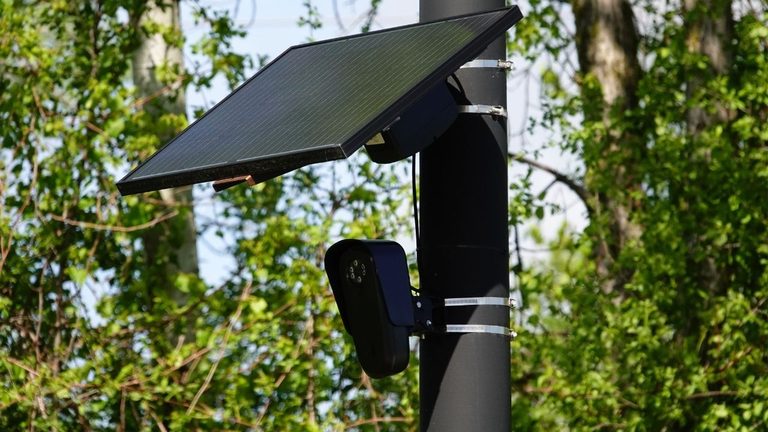
Granbury currently operates roughly 26 Flock cameras that capture vehicle license plates and retain the data for up to 30 days. Party officials argue that the real issue is not the cameras themselves but the government’s ability to store, search, and share detailed records of motorists’ movements without a warrant.
Earlier this year, Hood County commissioners and residents ordered the county‑operated Flock cameras to be unplugged and covered after privacy concerns were raised. The new resolution seeks to extend that same precaution to Granbury, urging the city council and police department to deactivate the system until robust privacy safeguards are in place.
Key provisions of the resolution
The Hood County GOP resolution outlines several specific measures:
- Prohibit state funding for surveillance systems that do not meet defined privacy standards.
- Bar law‑enforcement agencies from accessing live ALPR feeds supplied by private businesses or homeowners’ associations without a probable‑cause warrant.
- Require that any vehicle data that does not generate an immediate match against verified law‑enforcement “Hot Lists” be permanently deleted rather than stored as a historical record.
- Mandate that any legally retained records be searchable only with a probable‑cause warrant.
- Require public hearings before any local government installs new surveillance technology.
- Require monthly public reports detailing the number of plates scanned, alerts generated, traffic stops initiated, and convictions resulting from those stops.
The resolution also addresses aerial surveillance linked to ALPR networks and calls for a warrant requirement before law‑enforcement can use cell‑site simulators or IMSI catchers.
Constitutional framing
Chair Krottinger emphasized that the debate is fundamentally about the Fourth Amendment. “The Fourth Amendment is not a suggestion, and we will not trade liberty for convenience,” he told The Dallas Express. He added that the issue extends beyond Flock cameras to the broader question of whether government agencies will continue to answer to the people or simply expect citizens to be tracked, cataloged, and stored in a database without suspicion of a crime.
The party plans to forward the resolution to Governor Greg Abbott, the Texas Republican Party, state legislators, the Hood County Commissioners Court, Granbury City Council, and the Granbury Police Department, urging them to make the matter a legislative priority.
Implications for Texas surveillance policy
If successful, the resolution could set a precedent for other Texas municipalities seeking tighter controls on automated surveillance. It also signals a growing partisan push for privacy protections that align with constitutional guarantees while reflecting the concerns of local families and faith‑based communities who value personal liberty.
Original reporting: The Dallas Express — read the source article.