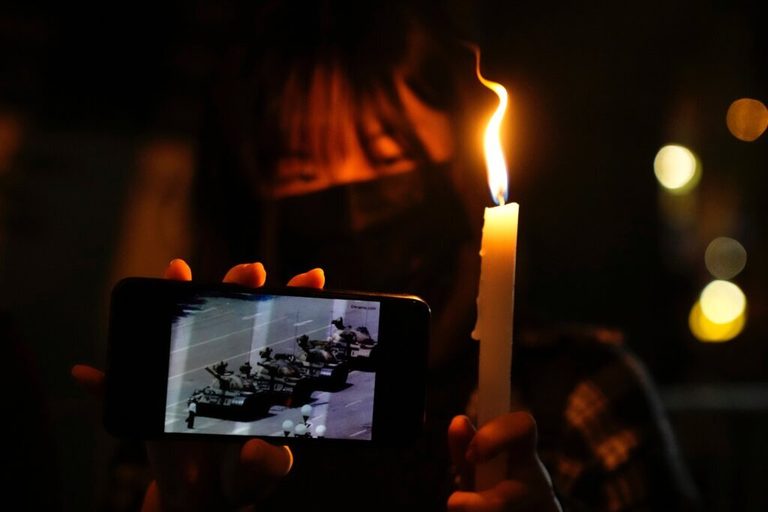
Hong Kong’s judiciary is set to issue its ruling at 10 a.m. local time on Friday in the high‑profile national security case against Lee Cheuk‑yan and Chow Hang‑tung. Both men led the now‑disbanded Hong Kong Alliance in Support of Patriotic Democratic Movements of China, the group that for three decades organized candlelight vigils drawing tens of thousands to remember the 1989 Tiananmen Square crackdown.
Charges and potential penalties
The pair pleaded not guilty to the charge of inciting subversion, a provision of the 2020 security law that carries a maximum sentence of ten years in prison. Prosecutors argue the case is not political, asserting the alliance called for the overthrow of China’s ruling Communist Party through unlawful means, citing the group’s demand to “end one‑party rule.”
Defendants’ statements
Lee told the court that the call was not to dismantle the party’s leadership but to move toward a democratic system where citizens decide their leaders, arguing the Communist Party should not enforce a “dictatorship.” Chow, who represented herself, described “ending one‑party rule” as ending a system where power is unrestricted and criticized the reversal of moral standards in the trial.
Trial background
The trial, originally slated for 75 days, concluded its closing statements after just 24 days. Earlier in the year, fellow defendant Albert Ho entered a guilty plea, a move that can sometimes lead to a reduced sentence. If convicted, Lee and Chow are expected to seek leniency at a separate hearing, with sentencing to follow later, potentially alongside Ho.
Context of the crackdown remembrance
The annual vigil was banned in 2020 amid the COVID‑19 pandemic, weeks before Beijing imposed the sweeping security law intended to quell the massive 2019 anti‑government protests. After restrictions lifted, the former vigil site was used for a pro‑Beijing carnival, and attempts by citizens to mark the June 4 anniversary were met with police removal.
International observations
Legal scholars note that the inciting‑subversion charge mirrors mainland China’s use of the law to target human‑rights lawyers, activists and intellectuals, including the late Nobel laureate Liu Xiaobo. Eric Lai, a senior fellow at the Georgetown Center for Asian Law, warned that Hong Kong’s courts appear to be aligning with the party‑led judiciary on the mainland.
Hundreds of thousands were killed when tanks rolled into Beijing’s Tiananmen Square in 1989, a moment that shaped China’s decision to pursue economic reform without accompanying political liberalization. The verdict in this case will be closely watched as an indicator of the extent to which Hong Kong’s freedom of expression remains viable under the security law.
Original reporting: Alexandria, VA News – WTOP News — read the source article.