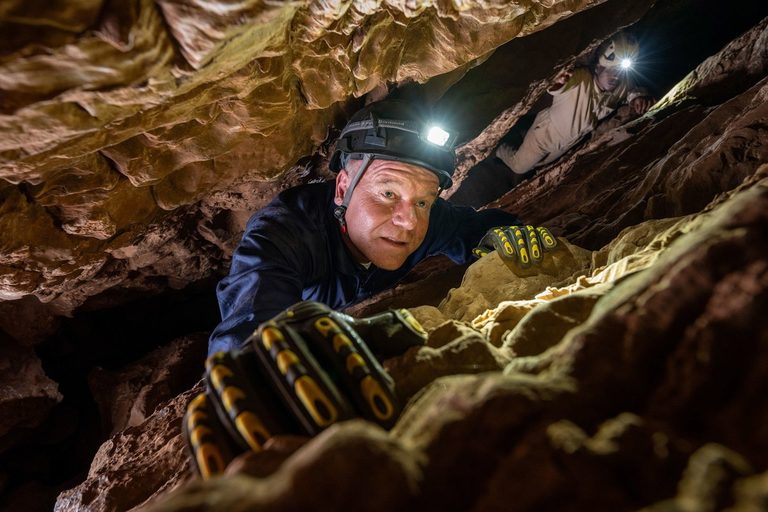
A recent study on the Homo naledi fossils found in the Rising Star cave system in South Africa has revealed that all the individuals discovered were female. The research, which analyzed ancient proteins from teeth, found no presence of the male version of the protein amelogenin.
Discovery and Implications
The discovery of Homo naledi in 2015 was a significant finding in the field of human evolution. The species was found to have a brain similar in size to that of a chimpanzee, but was believed to have engaged in sophisticated behaviors such as burying their dead and creating symbols on rock walls. The new findings add to the mystery surrounding this species, with scientists unsure why only female individuals were found at the site.
According to Lee Berger, a paleoanthropologist and National Geographic explorer in residence, the results were unexpected and have sparked a lot of discussion among scientists. Berger suggests that the absence of male individuals could be due to sex bias in mortuary practices, with Homo naledi potentially burying their dead in a way that separated individuals by sex and gender.
However, other scientists, such as Michael Petraglia, a professor at Griffith University, argue that the idea of a sex-specific burial site is not supported by the evidence. Petraglia suggests that the presence of only female individuals could be due to other factors, such as the species having groups with high female to male sex ratios.
Research and Analysis
The research was led by molecular scientist Palesa Madupe, who analyzed 23 samples of tooth enamel from the fossils. The study found that all the teeth came from females, with no presence of the male version of the protein amelogenin. The technique used to determine the sex of the individuals is a relatively new one, but has been widely deployed on ancient remains.
The findings have significant implications for our understanding of human evolution and the behavior of early human species. The discovery of Homo naledi has already challenged our assumptions about the evolution of human behavior, and the new findings add to the complexity of this species.
Original reporting: KRDO (Colorado Springs metro) — read the source article.