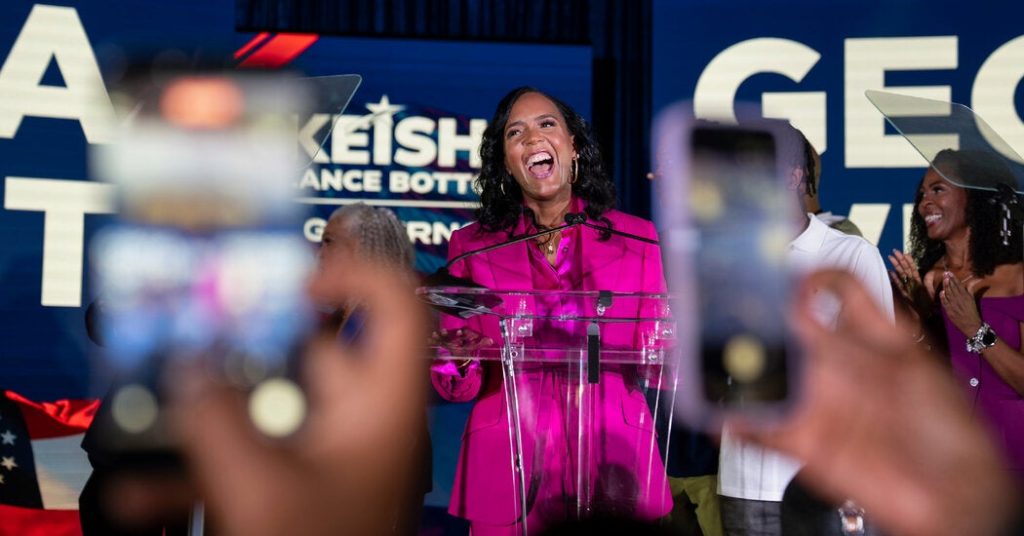
The November 2026 election delivered a remarkable slate of historic milestones that underscore the strength of American democracy. Voters across the nation elected the first Black woman governor of Georgia, the first openly gay U.S. senator from New Hampshire, the first Black senator from Mississippi since Reconstruction, the first American Indian governor of New Mexico, the first Native American woman senator from Minnesota, the first Muslim senator from Michigan, and the first two governors of Hispanic heritage in Texas and California.
Statewide breakthroughs continued as Wisconsin, Nevada, and Florida chose their first Black governors, all men, while Tennessee, Ohio, and Minnesota elected women as chief executives. South Carolina will be represented in the U.S. Senate by its first woman, and Illinois will send two women to the upper chamber—one African‑American and one with family ties to Thailand. In the House, the incoming Congress will include 117 women, seven more than the record‑setting outgoing body.
Voter Independence Defies Identity Politics
Despite the flood of firsts, the election’s deeper story is the reaffirmation of voter independence. Over the past two years, the Trump administration pursued a vigorous stance against identity‑driven politics, and the results show that the American electorate remains cantankerous, stubborn, and fiercely independent. Both Democrats and Republicans benefited from a voter mindset that prioritized character and policy over demographic labels.
President Trump’s leadership faced what the op‑ed calls an “unprecedented assault,” yet democracy not only survived—it thrived. The administration’s emphasis on free and fair elections proved decisive, throwing off any notion of a one‑man hegemony and allowing the diverse, energetic voice of the people to be heard at the ballot box.
Historical Perspective on Democratic Resilience
Historians Allan Nevins and Gordon S. Wood have long noted that American democracy is rooted in the power of the people. Nevins highlighted the 1857 Dred Scott decision and the 1860 election of Abraham Lincoln as moments when the nation’s destiny was decided by voters. Wood traced the evolution of democratic practice from the founding era through the Jacksonian surge, emphasizing that ordinary citizens have always been the ultimate arbiters of the nation’s direction.
These reflections reinforce the op‑ed’s central claim: the 2026 election demonstrates that, despite its imperfections, American democracy possesses a remarkable capacity to respond to the moment and to elevate ordinary citizens to positions of historic significance.
Looking Forward
The results may not align perfectly with every individual’s preferences, but they affirm the enduring principle that the American people, united by a shared love of liberty, faith, and family, continue to shape their own destiny. As we move toward the next election cycle, the nation can take heart in the knowledge that the ballot remains the most reliable guardian of freedom.
Original reporting: Herald-Standard – latest news for Uniontown, Pennsylvania — read the source article.