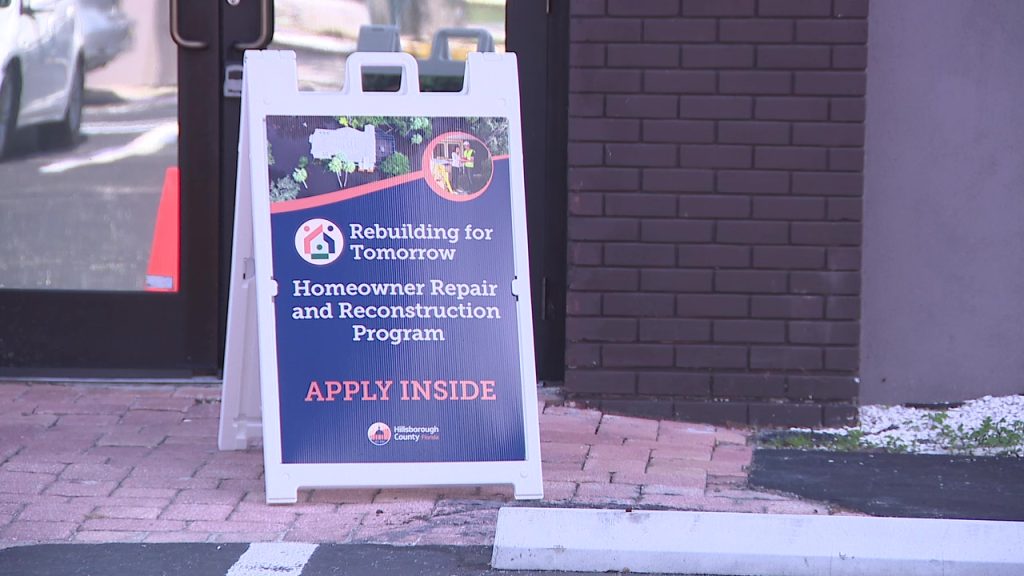
In a significant move to support local families, Hillsborough County is launching two new pop-up disaster relief centers to assist low-to-moderate-income households in recovering from the devastation caused by Hurricanes Helene and Milton. These centers aim to help residents secure federal funding for necessary home repairs.
Community Support for Rebuilding
Nearly two years after the hurricanes struck the Tampa Bay region, $211 million in federal aid is available through the U.S. Department of Housing and Urban Development. This funding is part of Hillsborough County’s Rebuilding for Tomorrow Homeowner Repair and Reconstruction Program, designed to cover the costs of lingering home repairs or reimburse those who have already made out-of-pocket fixes.
Angela Lawson, the project manager for housing programs, noted that about 1,000 local homeowners applied for assistance in the program’s first month. The initiative specifically targets low-to-moderate-income households, emphasizing the county’s commitment to making communities whole again.
Accessing Assistance
Starting June 8, temporary service sites will open on Mondays and Tuesdays to guide applicants through the paperwork process. The Wimauma Community Health Center will host a pop-up center every Monday, while the Plant City Community Resource Center will operate every Tuesday. Both centers will be open from 8 a.m. to 5 p.m. Homeowners can also visit the existing Rebuilding for Tomorrow service center on Hillsborough Avenue.
Residents must provide specific documentation, including a birth certificate and proof of homeownership at the time of the hurricanes, to apply for assistance. Case manager Malcolm Randolph reassures applicants that the program is a secure government initiative, addressing concerns about sharing personal data.
Stories of Resilience
West Tampa resident Faye Fulks, an elderly homeowner, shared her struggles with ongoing damage from the storms. “It took the front screen door off and the window on the side of the house,” Fulks said, describing how rainwater has been entering her home. She expressed gratitude for the relief center’s support in addressing these issues.
Disaster managers, like Lawson, encounter similar stories of structural damage daily, with many families still living in homes with mold, inadequate roofs, or non-functioning kitchens and bathrooms. “They feel a sense of relief that repairs and hope are potentially around the corner,” Lawson said, highlighting the program’s impact.
Future Uncertainties
While the program offers hope, officials have not yet confirmed the timeline for application approvals or fund disbursement. It remains uncertain how many more families will qualify before the funding is exhausted, underscoring the ongoing need for community support and resilience.
Original reporting: Tampa Bay Florida News (HLL/CB) — read the source article.