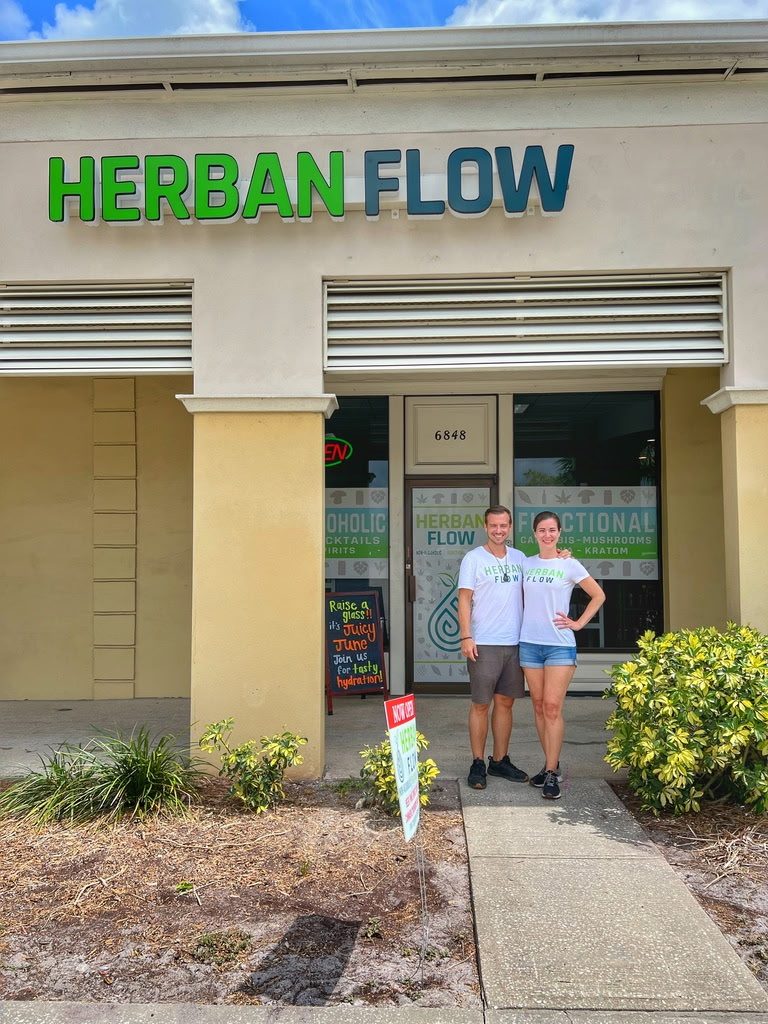
St. Petersburg, Fla. – Herban Flow, a local retailer that offers non‑alcoholic drinks and hemp‑derived alternatives, announced it will close its Tyrone store on Dec. 1. The decision follows a new federal definition of hemp that could eliminate the majority of the products driving roughly 80% of the shop’s sales.
Federal rule reshapes the market
Congress has revised the federal definition of hemp, setting a limit of 0.4 milligrams of total Delta‑9 and related cannabinoids per container for finished hemp‑derived products. The rule, slated to take effect Dec. 11, also counts total THC, including THCA. By comparison, a typical 5‑milligram Delta‑9 beverage contains more than twelve times the new allowable amount.
Co‑founder Michael Smith explained that any items containing Delta‑9, hemp, THC, edibles or full‑spectrum tinctures will have to be removed. “The whole front half of the room at our store will be gone,” he said. “What will still be on the shelves will be CBD, functional mushrooms, kanna, kava and our adaptogen‑based drinks and non‑alcoholic spirits.”
Local impact and family roots
Smith, who has been sober for six years, built Herban Flow with his wife, Caitlyn, to provide alternatives to traditional alcoholic beverages. Their Tyrone location at 6848 22nd Ave. N. will close, while the downtown shop at 501 Dr. Martin Luther King Jr. St. N., Unit 103 will remain open, focusing on the non‑alcoholic lineup.
“We are going to focus on selling our non‑alcohol products at our downtown location,” Smith said. “From there, once those sales are gone, we are probably going to have to shut down our second location. We’re hoping a solution can come in before that.”
Supply chain strain and regulatory uncertainty
The new rule is already affecting suppliers upstream. “We’re seeing our suppliers being cut off,” Smith noted. “Some of our customers who are truly sober are wondering, ‘what are we going to do.’”
Florida lawmakers have debated how to regulate intoxicating hemp products without wiping out the industry, but proposals tying THC beverage sales to the state’s alcoholic beverage system failed to pass during the 2026 legislative session. State regulators have not yet clarified whether Florida’s existing framework will protect businesses that comply with state law but fall short of the new federal limit. “The Department of Agriculture has not said whether a business would be protected if state law differs from federal law,” Smith said, adding that officials have been silent on the issue.
Potential for federal amendment
Congress could still amend or delay the restrictions before Dec. 11, but Smith expressed doubt that further changes would be enough to keep both stores operating as they do today. “If we are able to resurrect our business, we’d love to, but my wife and I are a grassroots business and this law may put us in a position where we can’t,” he said.
Herban Flow’s situation highlights how federal regulatory shifts can ripple through local economies, especially for small, family‑run enterprises that rely on niche product lines. The community will be watching to see whether any legislative relief emerges and how other hemp‑derived product retailers adapt.
Original reporting: St. Pete Catalyst — read the source article.