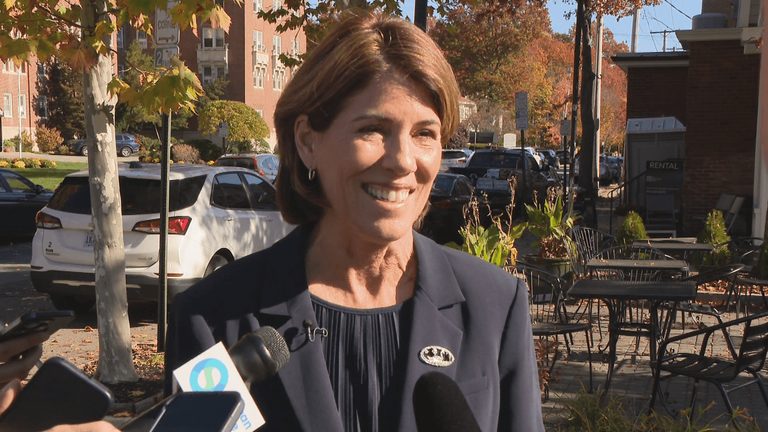
PROVIDENCE, R.I. — Helena Foulkes will become Rhode Island’s next governor after a landslide victory on Election Day. The former CVS executive captured 57% of the vote, outpacing independent candidate Ken Block by 30 points, while Republican Aaron Guckian finished third with 13%.
Foulkes spent Wednesday morning at a Providence café greeting supporters and thanking voters for the overwhelming support. She told reporters she will announce additional plans and staffing decisions in the coming days.
Policy priorities announced
During her remarks, Foulkes outlined two major initiatives she intends to pursue immediately. First, she set a goal of creating 20,000 new housing units, emphasizing modular construction as a fast‑track solution to the state’s affordability challenges. Second, she pledged to expand renewable energy projects, aiming to lower utility bills for Rhode Island families.
“My message of changing state government resonated with voters,” Foulkes said. “I feel a deep sense of responsibility and am humbled to serve the people of this great state.” She added that a high voter turnout in favor of Democrats likely contributed to the decisive result.
Election context
The election marked a significant swing toward the Democratic Party in Rhode Island, with Foulkes winning by a margin that eclipses typical statewide races. Independent Ken Block secured the second‑largest share of the vote, while Republican Aaron Guckian’s 13% finish placed him well behind the two leading candidates.
Foulkes, who has not previously held elected office, emphasized that her administration will focus on practical solutions for families, including affordable housing and lower energy costs. She expressed optimism about the state’s future, noting that the election night’s results reflected a broader desire for change after years of political turbulence.
Looking ahead
In the weeks ahead, Foulkes plans to convene with her transition team to flesh out the details of her housing and energy agendas. She indicated that the modular home initiative will involve partnerships with private developers and state agencies to streamline permitting and construction processes.
Renewable energy efforts will target both new projects and upgrades to existing infrastructure, with an eye toward reducing the financial burden on households across the state.
As the new governor‑elect prepares to take office, Rhode Island residents can expect a series of announcements outlining how her administration will translate campaign promises into actionable policies.
Original reporting: NBC 10 WJAR (Sinclair) – local — read the source article.