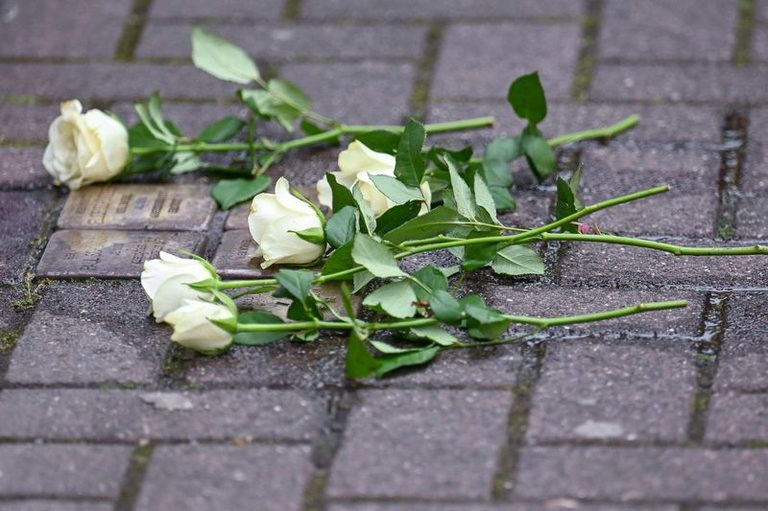
Heidenau, a small town near Dresden in the eastern German state of Saxony, voted on Thursday to reject any further installation of brass memorial plaques known as “Stolpersteine.” The motion, introduced by local branches of the far‑right Alternative for Germany (AfD) and the centre‑right Christian Democratic Union (CDU), passed the town council with a majority.
Decision and rationale
Council members argued that the cobblestone‑shaped plaques, which are embedded in sidewalks and can be stepped on, are inappropriate for public spaces. Supporters of the motion said future commemorations should be concentrated at a dedicated memorial site on the town’s northern cemetery, where a central monument can be maintained.
The town’s administration issued a statement before the vote, calling the blanket ban “neither necessary for the creation of a central memorial nor justified by the proposal itself.” Nevertheless, the council’s decision reflects growing pressure from the AfD, which currently leads national opinion polls ahead of Chancellor Friedrich Merz’s CDU.
Political context
The vote has reignited debate over the CDU’s adherence to the informal “Brandmauer” – a firewall that traditionally keeps Germany’s mainstream parties from cooperating formally with the AfD. While the AfD has repeatedly challenged Germany’s Holocaust remembrance practices, its co‑founder Alexander Gauland once dismissed the Nazi era as merely “bird shit” in an otherwise successful thousand‑year German history.
Charlotte Knobloch, head of a Jewish regional association in Bavaria, condemned the decision, saying, “I am appalled that a democratic party has chosen to support such a transparent manoeuvre by the extremist AfD.” The AfD and CDU local branches did not respond to requests for comment.
Impact on remembrance
Stolpersteine have become a prominent feature of Germany’s Holocaust remembrance culture, with more than 70,000 plaques installed across the country. Critics of the Heidenau ban worry that limiting new installations could diminish public awareness of individual victims of Nazi persecution.
Proponents, however, maintain that a single, well‑maintained memorial site can provide a dignified focal point for education and reflection, without the practical concerns of plaques being stepped on or damaged.
Looking ahead
The Heidenau council’s decision may set a precedent for other municipalities grappling with how best to balance historical memory with local sensibilities. As the AfD continues to gain electoral traction, similar proposals could surface in other towns and cities, prompting further discussion about the role of partisan politics in shaping Germany’s approach to Holocaust remembrance.
Original reporting: Appleton, WI News Feed (HLL/CB) — read the source article.