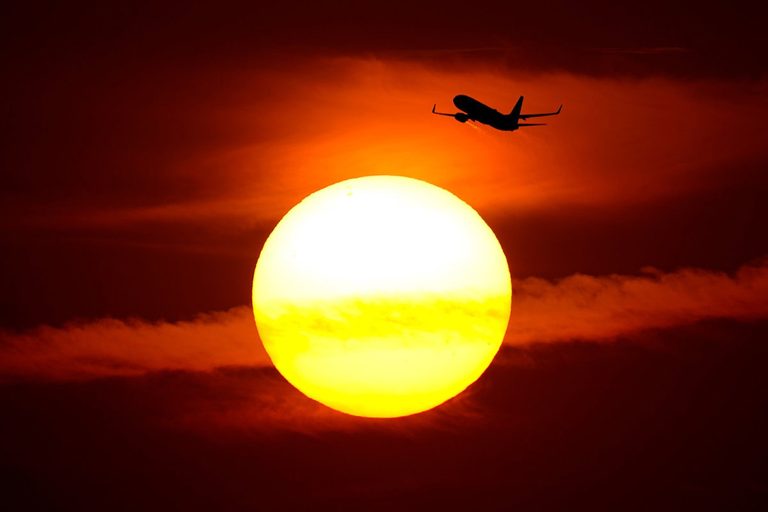
As the summer months bring hotter temperatures, air travel can be impacted in unexpected ways. High temperatures can affect aircraft performance, resulting in travel delays, weight restrictions, fuel stops, and even cancellations.
How Heat Affects Aircraft
Airplanes rely on denser air to help the engine and wings generate lift for takeoff. High temperatures cause air molecules to spread farther apart, making the air less dense or thinner. When the temperatures get very hot, takeoff becomes substantially more challenging.
According to Embry-Riddle Aeronautical University professor Cary Grant, a hot summer day can impact the operation of an aircraft just like snow or ice. Grant, who spent decades flying as a pilot with United Airlines, explained that the engines require air to go through the engine and propel it back out. If there’s less air coming in the front, there’s less air going out the back.
The Federal Aviation Administration (FAA) stated that airlines can reduce aircraft weight to safely take off by offloading cargo or passengers. They may also reduce the amount of fuel loaded to accommodate all passengers, in which case they may have to add a fuel stop to reach their intended destination.
Impact on Crew Members and Passengers
Extreme heat can also have effects on crew members and passengers. Airport ground crews in hot climates can be exposed to oppressive heat, and airlines must protect their health. Inside the cabin, airlines want to make it comfortable for their customers, sometimes asking passengers to close their window shades as the plane pulls to the gate to help keep the interior as cool as possible.
In recent years, heat waves are increasingly hotter and more frequent, according to the Environmental Protection Agency. This means passengers are frequently left with little choice but to be prepared for delays and cancellations in hot weather.
Original reporting: KEYT (Ventura/Santa Barbara) — read the source article.