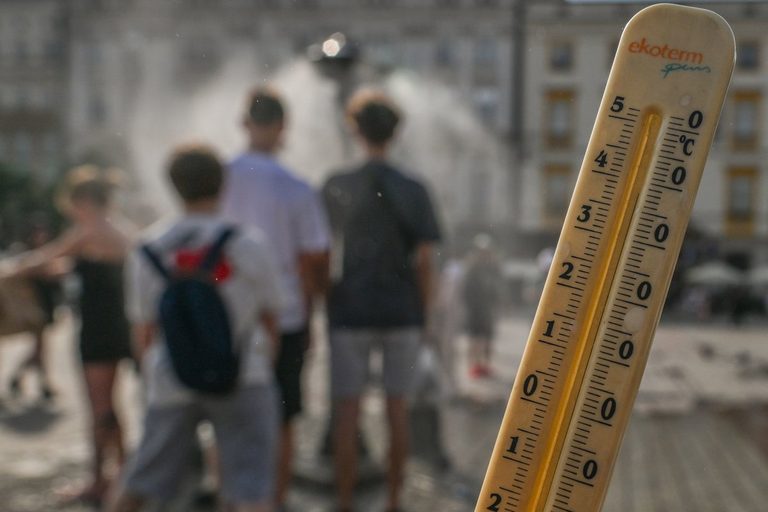
The US is in the midst of a severe heat wave, with temperatures skyrocketing for the third straight day across the Eastern US. Cities from Boston to Washington, DC are trying to keep residents cool amid outdoor July 4th celebrations. Dozens of daily records are being set as the combination of heat and humidity sends the heat index soaring.
Measuring Heat
But "how hot is it?" is not as straightforward a question as it seems. And understanding the different heat metrics can be lifesaving, since heat is the number one weather-related killer in the US. The heat index is a value calculated by combining the air temperature and relative humidity, to arrive at something close to a "feels like" air temperature.
Other metrics, such as the wet bulb temperature and the wet bulb globe temperature, are more focused on the physiological effects of extreme heat on the human body. The wet bulb temperature measures how efficiently our bodies can cool down through sweating, while the wet bulb globe temperature incorporates factors such as temperature, humidity, wind speed, and solar radiation.
Climate scientists tend to favor the use of the wet bulb temperature and wet bulb globe temperature in their studies of when and where heat stress may have surpassed, or may very soon surpass, the limits of human survivability at certain times of the year. Research has shown that this is already on the cusp of happening in parts of South Asia and the Middle East, and that continued emissions of fossil fuels will greatly expand the areas that people will have a hard time surviving in if they go outdoors during the day for hours at a time.
Original reporting: KRDO (Colorado Springs metro) — read the source article.