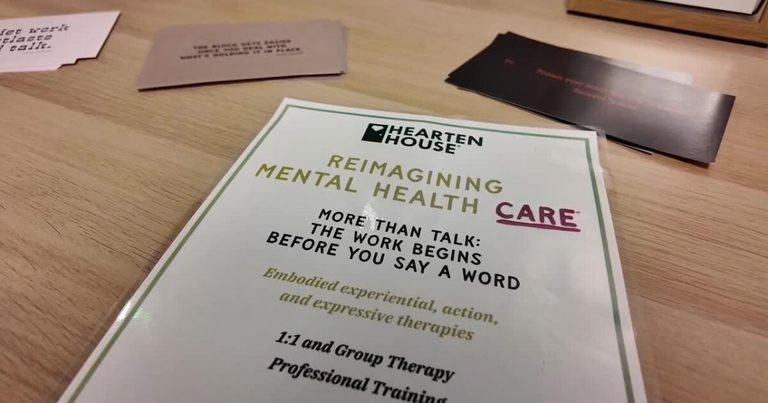
Aimee Hadfield, founder of Hearten House, announced that her mental‑health practice has stopped admitting new clients to its intensive outpatient program while a lease dispute with the Salt Lake City Housing Authority remains unresolved. The disagreement centers on the authority’s plans to remodel a room that Hearten House subleases on the third floor of the historic Oquirrh School at 350 S. 400 East.
Background on Hearten House
Hearten House uses art, movement and other experiential therapies to help individuals work through trauma. Hadfield, who has personally lost loved ones to addiction and mental‑health challenges, says the program typically lasts eight to sixteen weeks and requires a stable, confidential environment for participants.
Details of the lease conflict
Under the written sublease, Hearten House shares one room with the Housing Authority, which may use the space for board meetings. Hadfield understood this arrangement, but on Sept. 22 she found two contractors inside the room while she was alone preparing to record a course. The door was marked “occupied,” yet the contractors entered and told her they intended to gut the room and remodel a kitchen for the authority.
Hadfield says she was never given prior notice of the construction plans, even though the sublease permits entry with “reasonable notice, except in an emergency.” A week later, another contractor entered while she was preparing a client for a trauma‑therapy session. She requested a clear construction timeline and scope so her practice could plan around the work.
Program pause and impact on clients
In an Oct. 21 email to the Housing Authority, Hadfield explained that Hearten House had paused admissions for a month because of the uncertainty surrounding the remodel. She emphasized that admitting new participants without a guaranteed, uninterrupted treatment environment would be unethical and unsafe.
Current clients are allowed to complete their treatment. Hadfield and Syd Sneddon, Hearten House’s director of programming and experiences, estimate that roughly a dozen individuals seeking the program have been placed on a waitlist or turned away.
Housing Authority’s response
Executive Director Daniel Nackerman replied that evening, describing the situation as a “minor lease dispute.” He said the shared room would be scheduled carefully and remodeled soon, characterizing the work as “nothing major” and indicating it would be completed toward the end of the process. Nackerman also suggested adding a lease addendum to establish a scheduling system, but did not provide a specific start date.
The authority did not respond to follow‑up questions about the contractors or a definitive construction timeline. Hadfield reports that no remodeling has yet occurred and she remains waiting for a clear plan before deciding the practice’s next steps.
Community implications
The pause highlights the challenges small mental‑health providers face when operating in shared municipal spaces. Residents who rely on Hearten House’s trauma‑focused services may experience longer wait times, underscoring the importance of clear communication and stable facilities for essential health programs.
Original reporting: FOX 13 KSTU (Scripps) – Salt Lake City — read the source article.