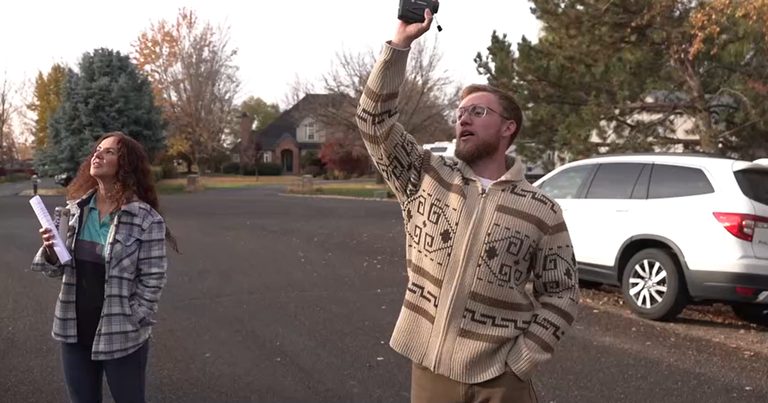
Residents of Nampa, Idaho, who live close to Amazon’s new Prime Air delivery zone are growing increasingly uneasy about the constant hum of delivery drones overhead. The buzzing, which can be heard even with windows and doors shut, has turned what was once a quiet neighborhood into a daily source of irritation.
Personal stories highlight the impact
Anna Luke, a longtime Nampa resident, describes her backyard as a “sanctuary” for her family, especially for her mother, who has limited mobility. “This backyard is like a sanctuary. You would come out here and listen to birds, and same for my parents. My mom isn’t very mobile, and so this is our world,” Luke said. “My husband and even my daughter, we would come sit on the back swing. It’s just not relaxing hearing these drones constantly fly. You’ll see one go one way and then one come the other.”
Another neighbor, Kristie Patterson, works from home and reports that the drones are audible inside her house throughout the day. “I can hear them inside. I work from home quite a bit. I’m constantly hearing them buzz over our house on a daily basis, so I don’t even have to be outside,” she explained. Patterson added that the noise has prompted her to explore housing options elsewhere, despite having lived in Nampa for a decade.
Community response and next steps
Local residents say they simply want their concerns heard. “Amazon’s so big it’s like going up against Goliath. The chances of anyone caring about us and our story, it’s slim. But I’m grateful that Channel 6 is giving us that opportunity to at least throw our stone,” Luke said. “We’re taking our shot, you know, and maybe Amazon will care about what they’re doing to their neighbors.”
The city of Nampa launched the Prime Air service on October 30. According to the city’s information page, residents with concerns can contact Amazon directly or file a complaint with the Federal Aviation Administration (FAA). The FAA oversees the safety and noise standards for unmanned aircraft, though it has not yet issued specific guidance on residential noise from delivery drones.
Broader context
Amazon’s Prime Air program aims to speed up package delivery by using autonomous aerial vehicles that can travel up to 15 miles per hour and carry parcels up to five pounds. While the technology promises convenience, it also raises new questions about community quality of life, especially in suburban neighborhoods where homes are close together.
Local officials have not yet taken formal action, but the growing complaints may prompt the city council to review zoning or noise ordinances related to unmanned aircraft operations. Residents hope that a dialogue with Amazon and the FAA will lead to mitigation measures, such as adjusted flight paths, limited operating hours, or quieter drone designs.
What residents can do
Neighbors are encouraged to document specific incidents—date, time, and duration of drone flights—and submit those details to the FAA’s complaint portal. Collective reporting can help regulators assess whether the current operations exceed acceptable noise thresholds.
In the meantime, families like the Lukes and the Pattersons are weighing their options, from installing sound‑dampening window treatments to exploring relocation. Their stories underscore the need for technology companies to balance innovation with the everyday peace of the communities they serve.
Original reporting: KIVI Idaho News 6 (Nampa stories) — read the source article.