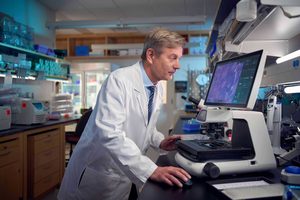
Recent research highlights the potential of a healthy gut microbiome in enhancing cancer treatment outcomes. Dr. Marcel van den Brink, a prominent figure in this field, has been exploring the connection between gut bacteria and the immune system since the early 1990s. His work was recently spotlighted at a symposium at the City of Hope Cancer Center in California, where he serves as president.
Microbiome and Cancer Care
The symposium, attended by U.S. Health and Human Services Secretary Robert F. Kennedy Jr., emphasized the microbiome as a ‘next frontier’ in cancer prevention and care. Dr. Jay Bhattacharya, Director of the U.S. National Institutes of Health, described recent findings as ‘mind-blowing.’ The American Society of Clinical Oncology has identified nearly 100 studies exploring how manipulating the gut microbiome could aid cancer treatment.
One promising area is the use of probiotics to enhance immunotherapy. A trial at University Hospitals Seidman Cancer Center in Cleveland is testing the probiotic CBM588 on kidney cancer patients. This strain, already popular in Japan, could potentially change the standard of care, according to Dr. Pedro Barata, a principal investigator of the study.
Antibiotics and Gut Health
Dr. Sumanta Pal, involved in related research at City of Hope, notes that the overuse of antibiotics has been linked to poor cancer outcomes. This has led to a more cautious approach in antibiotic use, focusing on confirmed bacterial infections to avoid disrupting beneficial gut bacteria.
Dr. Arielle Elkrief from the CHUM Microbiome Centre emphasizes the importance of ‘first, do no harm,’ highlighting the negative impact of broad-spectrum antibiotics on gut health. At her center, antibiotic use in lung cancer patients has significantly decreased following an educational campaign.
Future Directions
Dr. van den Brink’s research on bone marrow transplant patients has shown that a balanced gut microbiome is crucial for survival. Dysbiosis, or an imbalance in gut bacteria, has been linked to lower survival rates and increased complications.
As research continues, the role of diet and specific bacterial strains in cancer treatment remains a key focus. A study from the University of Texas MD Anderson Cancer Center found that a high-fiber diet improved treatment responses in melanoma patients, underscoring the potential of dietary interventions in cancer care.
Original reporting: 40/29 / KHBS (NW Arkansas) — read the source article.