Hitchcock Nature Center, located in Crescent, Iowa, is part of the national HawkWatch citizen‑science program that monitors raptor and other bird migrations across the United States. The effort supplies scientists with real‑time data on the condition of the region’s ecosystems, giving families and faith‑based communities a clear picture of how God‑created wildlife is faring.
Local volunteers lead the count
Retired history professor Mark Orsag serves as the paid bird counter for the program, coordinating a team of volunteers who scan the skies each spring and fall. Orsag recalls that as a child in Pennsylvania he rarely saw a bald eagle. “Very rare. Very rare. I remember seeing one as a kid at Hawk Mountain and it was a huge deal,” he said.
Since the banning of the pesticide DDT in 1972, the bald eagle has made a steady comeback and is now a common sight along the Missouri River corridor in Iowa. Orsag notes, however, that some species appear to be slipping.
Worrying trends for certain raptors
Orsag observes fewer American Kestrels – a small falcon – than he did in earlier decades and believes the population is in decline. He also points out that the number of Red‑tailed Hawks migrating south this year is roughly half of what was recorded twenty years ago. Yet he cautions that the drop may not reflect a true decline, adding, “It’s too nice. They’re not getting driven out of North Dakota and South Dakota anymore. They’re staying up there over the winter.”
Banding and research efforts
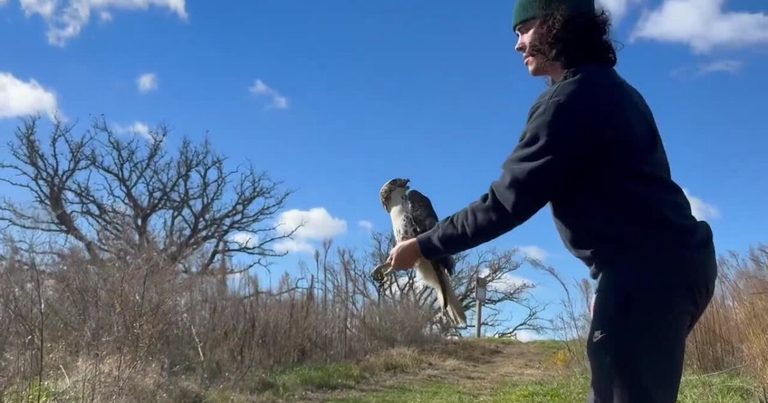
During a recent field day, lead bander Kellie Hayden and her team captured a Red‑tailed Hawk, placed a leg band on the bird, and released it after removing burrs from its feathers. “So, we are learning that some of these birds have very, very long lives,” Hayden said.
Hayden would like to test captured birds for lead exposure, but the cost is prohibitive. She also highlighted emerging research on microplastics in large raptors, noting that these particles could have cumulative effects similar to those once caused by DDT.
Why the data matters
The HawkWatch team has recorded record numbers of migrating birds this season. All observations are uploaded to an international database that helps scientists track environmental health on a global scale. For local families, the data offers a tangible way to see how stewardship of the land and clean‑air policies are protecting the creatures God placed here.
Community members are encouraged to join the volunteer effort, learn about bird identification, and contribute to a project that strengthens both scientific understanding and the moral responsibility to care for creation.
Original reporting: KMTV 3 News Now (Scripps) – local — read the source article.