
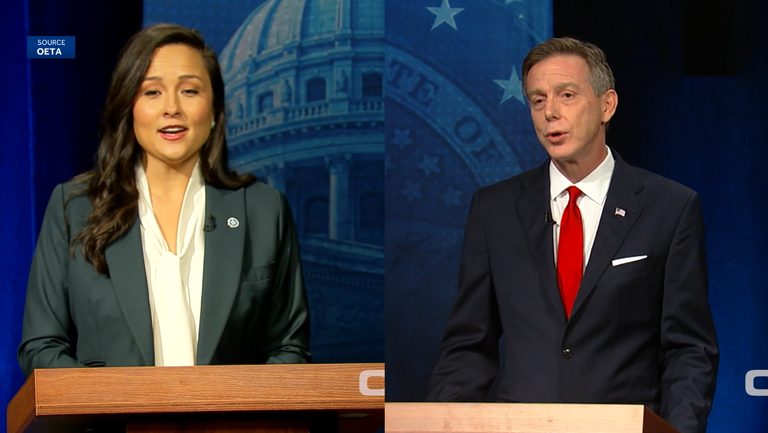
Oklahoma voters heard a clear contrast of visions Thursday when Democratic candidate Cyndi Munson and Republican candidate Mike Mazzei debated the state’s biggest challenges. The discussion centered on three core issues that affect families every day: education, health care and the growing presence of artificial‑intelligence data centers.
Education: Pay, Choice and Literacy
Munson opened the education segment by warning that Oklahoma ranks near the bottom because the state “does not make the proper investments to take care of our teachers.” She pledged to work with the legislature for targeted funding that would raise teacher and support‑staff salaries, expand mental‑health services in schools and boost special‑education resources.
“We are last because we do not make the proper investments to take care of our teachers. We’ve got to increase pay for our teachers and our support staff,” Munson said.
Mazzei countered with a school‑choice focus, proposing to hire a statewide literacy director in his first week to replicate Mississippi’s rise from 50th to first in reading outcomes. He highlighted phonics curricula, a network of reading coaches and strict accountability as the keys to success.
“I will hire a statewide literacy director … to replicate the very successful Mississippi model, which took them from 50th to first in the country in reading outcomes,” Mazzei asserted.
Health Care: Expansion vs. Waste Reduction
On health care, Munson linked Medicaid expansion to keeping Oklahomans insured and preserving hospital solvency, especially in rural areas and long‑term care facilities for the aging population.
“I have stood up and fought for protecting Medicaid expansion in Oklahoma, to ensure that Oklahomans not only have health insurance, but that our hospitals stay whole,” Munson said.
Mazzei shifted the conversation to fiscal responsibility, pointing to a past audit that uncovered $1.6 billion in questionable SoonerCare expenses each year. He argued that eliminating waste, fraud and abuse is the first step toward a healthier system.
“The first thing we have to address with health care is the waste, fraud, and abuse that’s in the current system,” Mazzei noted.
Artificial Intelligence and Data Centers: Guardrails for Growth
Both candidates agreed that Oklahoma’s attractive land and relatively loose regulations have drawn big‑tech data‑center developers, but they diverged on how to manage the impact on families.
Munson announced she would sign an executive order imposing a moratorium on new data‑center projects, insisting that the state should not shoulder any infrastructure, energy or electricity costs for these facilities.
“I will ensure that we don’t pay a single dime for any infrastructure or any energy or electricity costs that data centers will place on working families,” Munson said.
Mazzei offered a different approach: four guardrails that would allow data centers to operate without burdening taxpayers. He called for no taxpayer funding, self‑provided electricity, construction only on locally approved industrial sites, and the use of advanced closed‑loop cooling systems.
“They shouldn’t get any taxpayer funds. They should provide for their own electricity, so electricity rates for the rest of us don’t go up,” Mazzei explained.
What’s Next?
With Election Day set for Nov. 3, both candidates will continue to travel the state, meeting voters and sharpening their messages. The debate highlighted a classic choice for Oklahomans: a focus on increased public investment in teachers and health services versus a platform of school‑choice, fiscal restraint and market‑driven technology growth.
Voters will weigh these proposals as they head to the polls, deciding which vision best supports Oklahoma families, faith‑based values and the Constitution‑upheld right to liberty.
Original reporting: Oklahoma City News Feed (HLL/CB) — read the source article.


