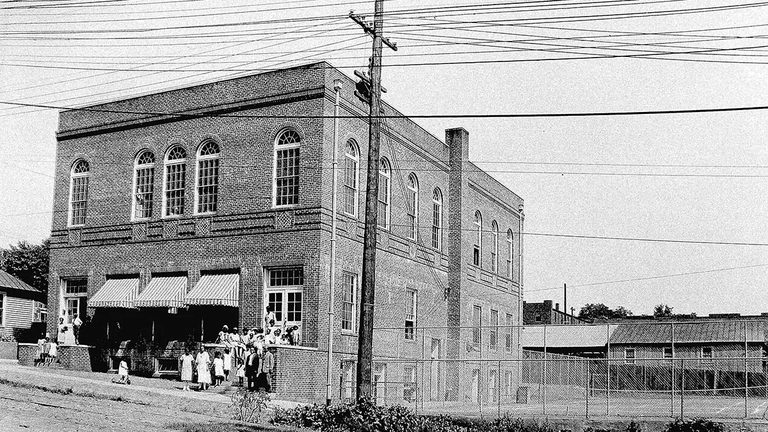
When segregation divided Greenville, South Carolina, into separate worlds, Black residents were forced to create their own institutions. One remarkable example is the Phillis Wheatley Center, founded by local leader Hattie Logan Duckett.
From a Small House to a Community Pillar
In 1919 Duckett opened the Phillis Wheatley Association on Haynie Street, naming it after the enslaved poet whose work was published in 1773. The original goal was to provide religious instruction and recreation for young Black women. As boys began to attend, the need for a larger space grew.
Duckett purchased a modest home on East McBee Avenue, but the operation soon outgrew its budget. She turned to Greenville businessman and mill owner Thomas Parker for help. A biracial board raised $65,000 for a permanent facility—$45,000 from White contributors and $20,000 from Black contributors. In a segregated city, those numbers illustrate the extraordinary effort required to build a place that segregation itself denied.
A Center in the Heart of Black Greenville
The new Phillis Wheatley Center opened at 121 Broad Street in 1924, situated in the city’s Black business district. It quickly became known as Greenville’s Black YWCA, offering music, dance, child care, sports, and a host of other programs. The Center also housed one of the earliest libraries available to Black residents and served as a gathering place for civic leaders.
During World War II, Black servicemen from the nearby Donaldson Air Force Base used the Center as a social hub because many parts of Greenville were closed to them. They played baseball, held meetings, and found a sense of community that the city otherwise denied.
Enduring Impact
By the 1950s, the children who had grown up in the Center’s gym and art rooms were the adults who helped guide Greenville out of segregation. The Center’s legacy demonstrates what Black Greenville could achieve through leadership, organization, and financial sacrifice.
Duckett’s work reminds us that, even in the face of systemic injustice, faith‑based and family‑centered initiatives can create lasting institutions that strengthen neighborhoods and uphold the Constitution’s promise of liberty for all.
Looking Ahead
The Greenville County Historical Society continues to document stories like Duckett’s, ensuring that future generations understand the role of faith, family, and community in shaping our city’s history.
Original reporting: Greenville Journal — read the source article.