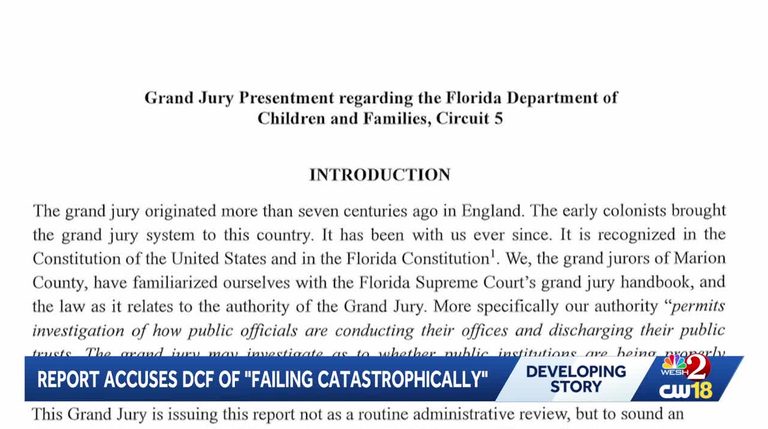
A grand jury report issued on Friday bluntly warned that the Florida Department of Children and Families (DCF) Circuit 5 – which serves Lake, Marion, Sumter and Hernando counties – is “failing catastrophically” in its duty to protect children and vulnerable adults. The report, described by the grand jury as more than a routine administrative review, was intended to “sound an alarm” about systemic neglect and abuse.
Key findings across the four‑county circuit
The grand jury gathered testimony from law‑enforcement officers, firefighters, attorneys and service providers. It highlighted a pattern of operational gaps that left many at‑risk individuals without adequate protection. In Marion County, for example, local law‑enforcement, medical professionals and community groups now meet weekly to review cases and develop safety plans because DCF’s response was deemed insufficient.
Among the cases examined were roughly a half‑dozen incidents involving children and the elderly that resulted in severe trauma or preventable deaths. One tragic example is the death of 15‑month‑old Daltin Miller in Marion County. After being removed from his mother’s care at birth, Daltin was placed with a relative. Despite warnings from a caretaker and a case‑management employee about the parents’ ongoing drug use and criminal histories, DCF reunified him with his father. The child later died of a fatal overdose, and both parents were charged with aggravated manslaughter.
The report also described a mother with a 17‑year record of documented abuse and violent behavior who was reunified with two of her children, one of whom later died from abusive head trauma. In another case, a daughter shot and killed her father after years of reporting sexual and physical abuse.
Foster‑care adoption concerns
Eight children who had been placed in foster care were adopted by their foster family despite 18 DCF investigations involving them. After the adoption, the report notes that an additional 37 DCF reports were filed, citing concerns from relatives, medical professionals, counselors and school employees. The adoptive father was later arrested on sexual‑offense charges involving the eldest child.
The grand jury also learned of 12 instances where DCF or case‑management workers were accused by law‑enforcement of falsifying reports or records. The report alleges that DCF leadership repeatedly ignored these warnings, despite years of evidence presented by multiple local agencies. “Meetings were held. Assurances were given. Promises were repeatedly made—and routinely broken,” the report states.
DCF’s response and recommended reforms
When asked for comment, DCF said, “The Department takes these findings seriously. Any case in which a child or vulnerable adult may not have been adequately protected warrants careful examination, and when opportunities to improve our practice are identified, we have an obligation to act.” The agency added that many of the report’s recommendations already reflect safeguards and reforms in place, while others would require legislative action, additional funding, or further legal review.
The report outlines 34 recommendations aimed at addressing the crisis. Key proposals include mandating body‑camera use for all abuse or neglect interviews, home studies and home visits; basing determinations on an accumulation of reports rather than a single allegation; and requiring at least two random drug screens per month for individuals actively involved in DCF investigations.
While the grand jury acknowledges that the issues highlighted represent only a fraction of the problems within Circuit 5, it urges swift action to protect the most vulnerable Floridians. The findings come at a time when state‑wide child‑welfare reforms are under discussion, and local officials in the affected counties are calling for greater accountability and resources.
What this means for families in Central Florida
For parents, grandparents and other caregivers in Lake, Marion, Sumter and Hernando counties, the report underscores the importance of vigilance and community involvement. Local law‑enforcement and medical professionals have already begun coordinated weekly reviews, a model that could be expanded statewide. Families are encouraged to report any concerns promptly and to stay informed about DCF’s evolving policies.
Community leaders and faith‑based organizations, long‑standing pillars of support for families, are also being asked to partner with DCF to ensure that children and vulnerable adults receive the protection they deserve. As the state works toward implementing the grand jury’s recommendations, the hope is that a more transparent, accountable system will emerge—one that truly safeguards the most vulnerable members of our neighborhoods.
Original reporting: WESH Orlando — read the source article.