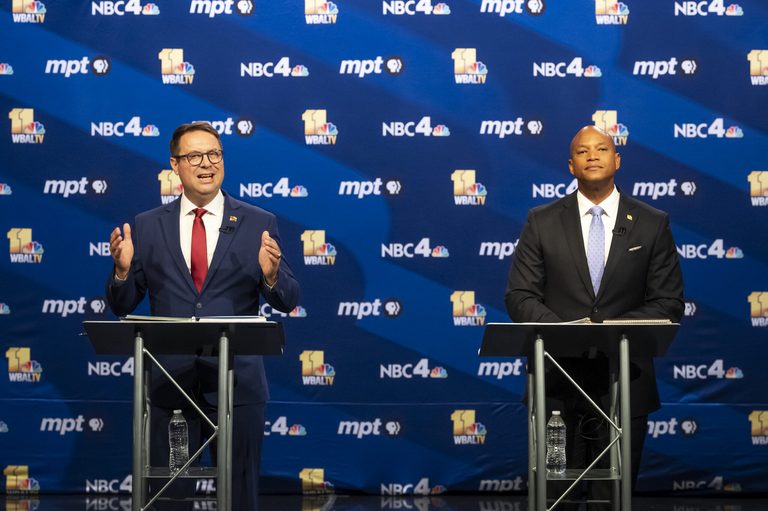
Maryland voters witnessed the sole televised debate between incumbent Governor Wes Moore (D) and Republican challenger Dan Cox on Tuesday in Owings Mills. The hour‑long event, hosted by Maryland Public Television, highlighted the stark policy differences and personal attacks that have defined the race.
Moore ties Cox to President Trump
Governor Moore repeatedly linked Cox to President Donald Trump, describing the challenger as a staunch supporter of the former president’s agenda. Moore noted that Maryland continues to grapple with “illegal tariffs” imposed by the Trump administration, which he said have hurt the state’s economy. By framing the debate around Trump’s national trade stance, Moore positioned himself as the defender of Maryland’s economic interests.
Cox attacks the governor’s record
Cox painted Moore as a “tax‑and‑spend liberal,” accusing the governor of lying about his accomplishments. He also called for a statewide moratorium on new data centers, arguing that modern facilities consume excessive energy and threaten water and land resources. Cox criticized Moore’s recent executive order on data centers as “political theater,” claiming it does not constitute a true moratorium.
Policy flashpoints
Key issues included electricity costs, business closures, and upcoming tax increases. Cox warned that higher taxes were on the horizon, while Moore refused to answer directly when asked if he would raise taxes to close projected multibillion‑dollar budget gaps. Instead, Moore emphasized attracting private investment and highlighted his administration’s progress on major infrastructure projects such as the Francis Scott Key Bridge, promising to open it “in record time.”
Polls show a solid lead for Moore
According to a University of Maryland, Baltimore County poll released Tuesday, Cox trails Governor Moore by 27 points. The survey also noted that third‑party candidates Andy Ellis (Green) and Cathy White (Working Class) each garnered about 3 percent, well below the 10‑percent threshold needed for debate participation.
Institute of Politics director Mileah Kromer said Cox’s lack of funding and limited appeal to unaffiliated voters present significant hurdles. She added that a strong debate performance could generate post‑debate coverage, but without money or broader voter appeal, momentum is unlikely.
Calls for additional forums
Cox urged Moore to agree to further debates at historically Black colleges and universities, specifically Morgan State University and Coppin State. Moore responded noncommittally, stating he was “ready for the next question.”
Local impact and next steps
With four weeks remaining before the November election, the debate underscored the divergent visions for Maryland’s future. Moore highlighted successes such as increased private investment and ongoing infrastructure projects, while Cox focused on fiscal restraint and environmental protections.
Both candidates left the studio expressing confidence in their performances, setting the stage for a final push toward Election Day.
Original reporting: Alexandria, VA News – WTOP News — read the source article.