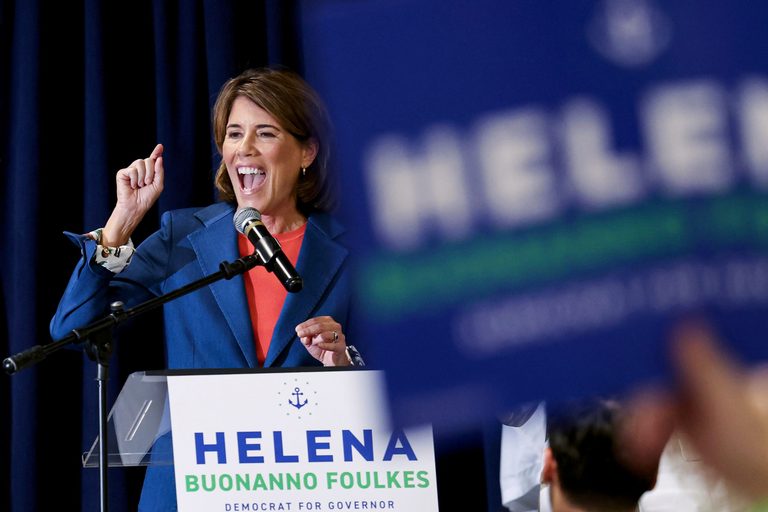
Providence, Rhode Island – Governor Dan McKee is confronting a serious primary challenge from Helena Foulkes, a former CVS Health executive, as the September 9 Democratic primary approaches. At 75, McKee seeks to avoid becoming the first Rhode Island governor to lose a primary in more than three decades.
Campaign dynamics
Foulkes, 62, has out‑raised the incumbent and saturated the airwaves with ads that criticize McKee’s handling of the Washington Bridge project. The bridge, which carries Interstate 195 over the Seekonk River, was partially closed in 2023 after officials flagged a critical failure. While the westbound side remains shut, the eastbound lanes have been reconfigured to handle all traffic, a situation that has frustrated commuters.
McKee argues that the closure was necessary to keep motorists safe and maintains that the bridge will be fully repaired by 2028, citing progress in Maryland’s own bridge projects as a benchmark. He points out that the replacement of Baltimore’s Francis Scott Key Bridge is not expected until 2030, suggesting Rhode Island’s timeline is reasonable.
Accusations and defenses
During the campaign, McKee has labeled Foulkes an “out‑of‑touch corporate person” who puts profit ahead of people. He references the opioid crisis, alleging that CVS’s policies under her leadership contributed to the problem. Foulkes rejects the claim, noting that CVS reduced opioid dispensing by 40 % while she led the pharmacy division and that the company settled nationwide lawsuits in 2022 after she had left.
Foulkes also warned that McKee’s attacks could alienate thousands of CVS employees in Woonsocket, a major employer in the state. She cited a letter from the 50 largest companies’ business leaders urging the governor to cease his criticism of the retailer.
Political backdrop
The primary comes at a time when Democratic voters in Rhode Island appear increasingly willing to oust incumbents. While McKee has secured labor endorsements, the state Democratic Party and the AFL‑CIO have withheld formal support. Foulkes draws on her political family connections—her grandfather and uncle, Thomas and Chris Dodd, served as U.S. senators from Connecticut—to bolster her credibility.
Both candidates are positioning themselves as champions of working‑class interests. McKee emphasizes his record of supporting labor and his promise to finish the bridge project, while Foulkes argues that her corporate experience equips her to create good‑paying jobs and address cost‑of‑living concerns.
What’s at stake
The winner of the Democratic primary is expected to become the heavy favorite in the November general election, given Rhode Island’s strong Democratic lean. Voters will need to decide whether they prioritize continuity and the promise of completing a critical infrastructure project, or whether they favor a candidate who promises a fresh approach and critiques perceived corporate influence in state politics.
As the campaign intensifies, both sides are likely to continue highlighting their respective visions for Rhode Island’s future, with the Washington Bridge remaining a central symbol of the governor’s record and the challenger’s critique.
Original reporting: Alexandria, VA News – WTOP News — read the source article.