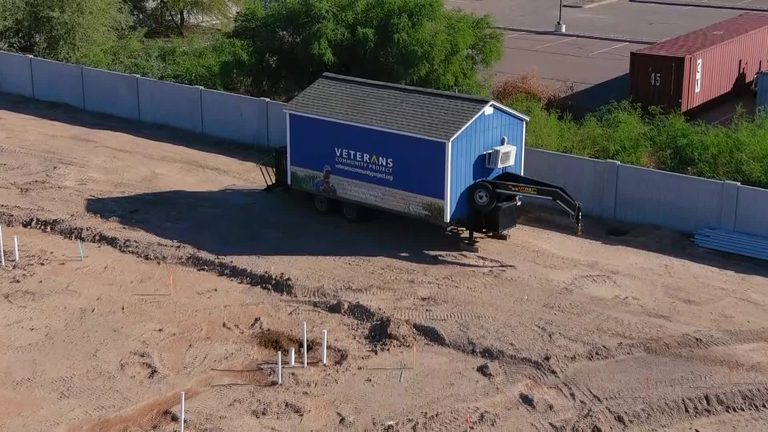
Construction has begun on a new 50‑unit tiny‑home village in Glendale, Arizona, that will provide transitional housing for veterans experiencing homelessness. The development, located near the intersection of 63rd Avenue and Grand Avenue, is a joint effort between the City of Glendale, which donated the land, and the nonprofit Veterans Community Project.
Community‑backed solution for a pressing need
According to the Veterans Community Project, roughly 40,000 veterans across the United States are currently without stable housing. Local leaders say the Glendale village will help reduce that number by offering a dignified, supportive environment for those who have served our country.
Rebecca Tallman, interim executive director of the Veterans Community Project of Glendale, explained that veterans face a range of obstacles when trying to secure housing, including transportation challenges, finding employment, and even securing housing for their pets. “We treat every individual as an individual and address what got them to that point,” Tallman said. “Our whole goal is making permanent housing a permanent solution.”
Design features that respect privacy and safety
The tiny homes are purpose‑built for veterans dealing with post‑traumatic stress disorder (PTSD). Each unit has windows on only one side wall, ensuring that no two homes face each other’s windows, and the beds are positioned toward the entry and exit to promote safety and ease of movement.
Beyond the physical structure, each resident will be assigned a case manager who can assist with job placement, financial counseling, and the transition to permanent housing. The case manager will also help veterans navigate the often‑complex process of securing benefits and accessing community resources.
Local support and future outlook
The project has received backing from several community partners, including the Arizona Housing Fund. Glendale officials see the village as a model for how cities can address veteran homelessness without relying solely on federal programs.
Construction is slated to be completed in early 2027, with the first veterans expected to move in shortly thereafter. City leaders hope the village will not only provide shelter but also serve as a catalyst for broader community involvement in supporting those who have served.
“Here in the West Valley, it’s just like many other places where we have veterans that are struggling,” Tallman noted. “We consider homeless not just those that are street homeless but also those that do not have a home—couch‑surfing, sleeping in a car, staying with others. This village gives them a stable foundation to rebuild their lives.”
Original reporting: azfamily KTVK/KPHO Phoenix (news) — read the source article.