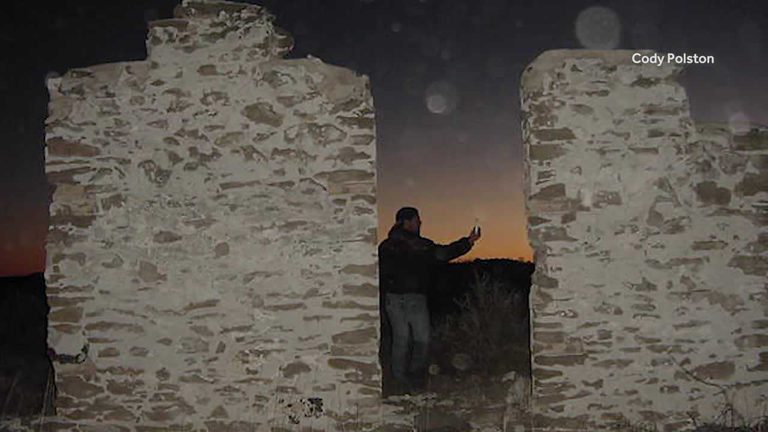
When the anniversary of the February 28, 1862 Battle of Valverde rolls around, the dry riverbank along the Rio Grande in New Mexico becomes a magnet for ghost stories. This year, local historian and paranormal investigator Cody Polston took a hands‑on approach, traveling to Fort Craig to see if the legends could be heard or felt.
Historical backdrop
Polston, author of several books on the western theater of the Civil War, reminded listeners that the clash was a strategic effort by Union troops at Fort Craig to keep Confederate forces from reaching the mineral‑rich territories of Colorado. “The Texans were moving up through Mesilla with Fort Union in their sights,” he said, noting that the battle is often overlooked because of its remote western location.
During the fight, Union forces withdrew from the fort, leading to a fierce engagement that left more than 500 soldiers dead. “He pulled his forces out of the fort, and there was a big clash,” Polston explained, adding that abandoning a rear guard is never a sound military move.
Testing the cannon‑fire legend
One of the most persistent tales claims that on the battle’s anniversary the sound of cannon fire echoes from Fort Craig. Polston set up listening equipment along the old riverbank and spent several hours at the site. “We just finished with our observations in our area, and we have nothing at all to report, nothing that sounded anything remotely like a cannon,” he reported.
The headless rider story
Polston also recounted a story he heard at the Valverde Hotel in Socorro, where a cowboy claimed to have encountered a headless man with a musket while searching for a lost calf near the historic lancer charge. The cowboy described a figure emerging from a bush, firing a musket, and then disappearing, his horse spooked and running into the bosque.
To evaluate the claim, Polston and his team recreated the scene, timing the shooter’s line of sight for four seconds—the length of time the original witness said he lost sight of the rider. After the reenactment, Polston concluded that the anecdote could be explained by natural factors such as wind, echo, and the human tendency to embellish frontier tales.
A lingering mystery
While most of the paranormal reports were debunked, Polston noted one odd occurrence that remained unexplained. While walking near the old ammunition magazine at Fort Craig, he and his crew detected a strong gunpowder smell that lingered for several seconds before dissipating. “You can smell it clear as day,” he said, adding that the scent vanished quickly.
Polston emphasized that such sensory experiences often have mundane origins—residual chemicals, wildlife, or atmospheric conditions—but he left the door open for further scientific inquiry.
Why the investigation matters
Beyond the thrill of ghost hunting, Polston’s work underscores the importance of preserving and accurately interpreting historic sites. By separating myth from fact, communities can honor their heritage without relying on sensationalism. “Understanding the real history helps us appreciate the sacrifices made here,” Polston said.
Polston continues to investigate other battlefield locations across the Southwest, seeking to blend rigorous historical research with modern investigative techniques.
Original reporting: WPBF West Palm Beach — read the source article.