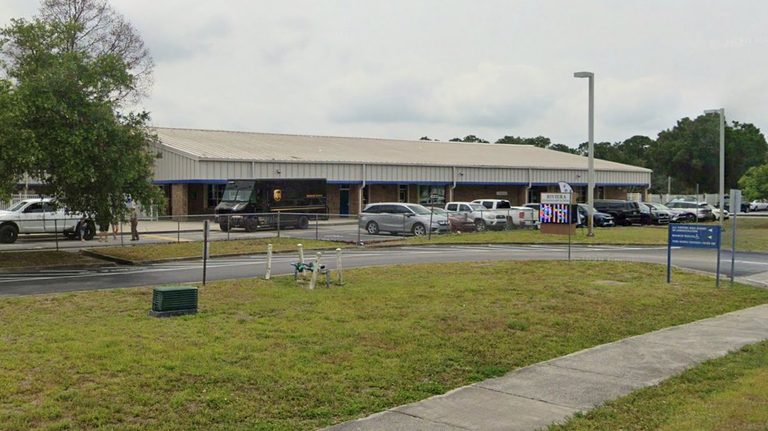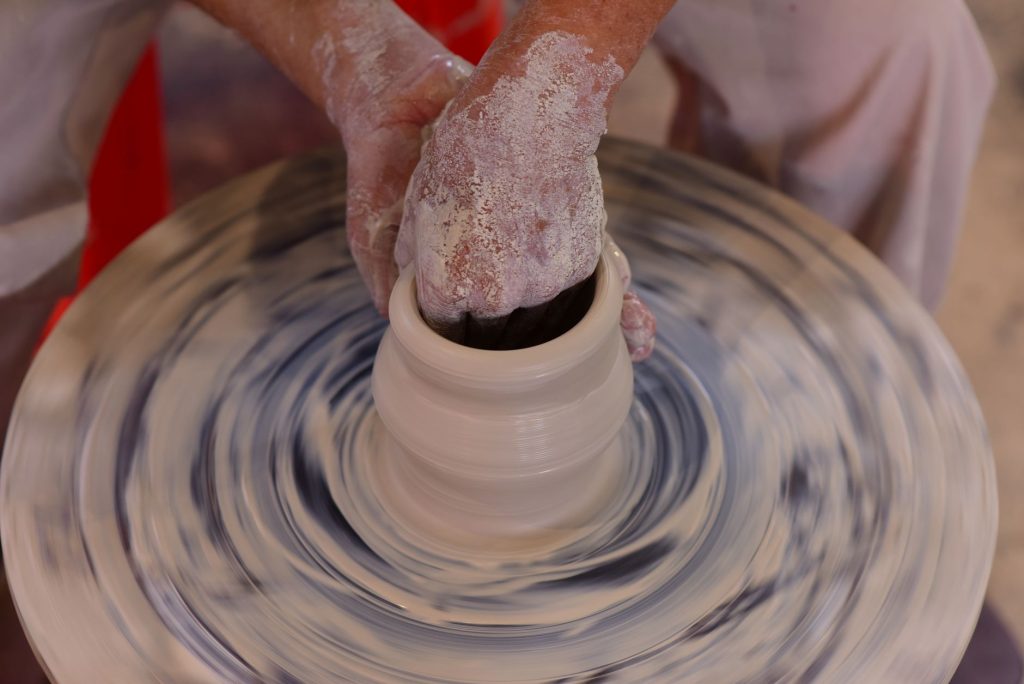
Around six o’clock on a Friday, when the last of the work-week traffic is finally thinning out on US-1, you might notice a small parking lot off Prima Vista Boulevard with a few cars pulled up close to a low building. Inside, a woman named Pam is centered at a wheel, hands dark with slip, shaping something that could become a mug or a vase or nothing at all yet. She’s been doing this for over two decades in Port St. Lucie. That’s the version of the place that regulars know — not the storefront, but the studio behind it.
Sugarmill Pottery sits in a stretch of Port St. Lucie that doesn’t get much foot traffic, the kind of commercial corridor where tire shops and tax offices hold down the corners. You could drive past it a hundred times and never slow down. But if you’ve ever taken a class here, or stumbled in on a whim to look at the finished pieces lining the shelves, you know this is the sort of spot that earns loyalty quietly.
Walk in and the first thing you notice is the smell — that mineral, earthy mix of wet clay and kiln warmth that you either know or you don’t. The retail section up front carries Pam’s own work and pieces from a handful of local potters: bowls with thick lips and wood-ash glazes, mugs that sit heavy and good in the hand, the occasional sculptural piece that looks like it washed up from somewhere ancient. Prices run from around ten or fifteen dollars for small items up to sixty or seventy for larger bowls or platters. Nothing here is mass-produced. You can see the fingerprints.
The real draw, though, is the classes. Sugarmill runs wheel-throwing sessions for beginners on weeknights and Saturday mornings, and Pam teaches most of them herself. A single session runs around forty-five to fifty-five dollars and covers a couple of hours of hands-on time at the wheel. You get to take home whatever survives the firing, which — fair warning — might not be what you imagined. The clay has opinions. First-timers almost always collapse their first cylinder. That’s part of it.
What makes the experience different from a drop-in paint studio or a one-and-done craft event is that Pam actually teaches. She’ll stand behind you, adjust your grip, explain why the clay is responding the way it is. She’s patient in the way of someone who has watched a thousand beginners fight the wheel and knows exactly where the struggle shows up. If you come back a second time, she remembers where you left off.
The clientele on any given evening is a mix — retirees looking for something to do with their hands, a couple on a date who found it on Google and figured why not, a teenager who got dragged in by a parent and is now weirdly focused. There’s no music pumping, no Instagram moment manufactured. Just people working at wheels in a long, low room while a kiln ticks in the back.
If you’re looking for something to give someone that isn’t another gift card, the finished-piece section up front solves that problem well. A handmade mug with an interesting glaze, maybe thirty dollars, made by someone who lives here and cares about the work. That’s harder to find than it should be.
Sugarmill Pottery doesn’t have a big sign. It doesn’t need one. The people who find it tend to come back.