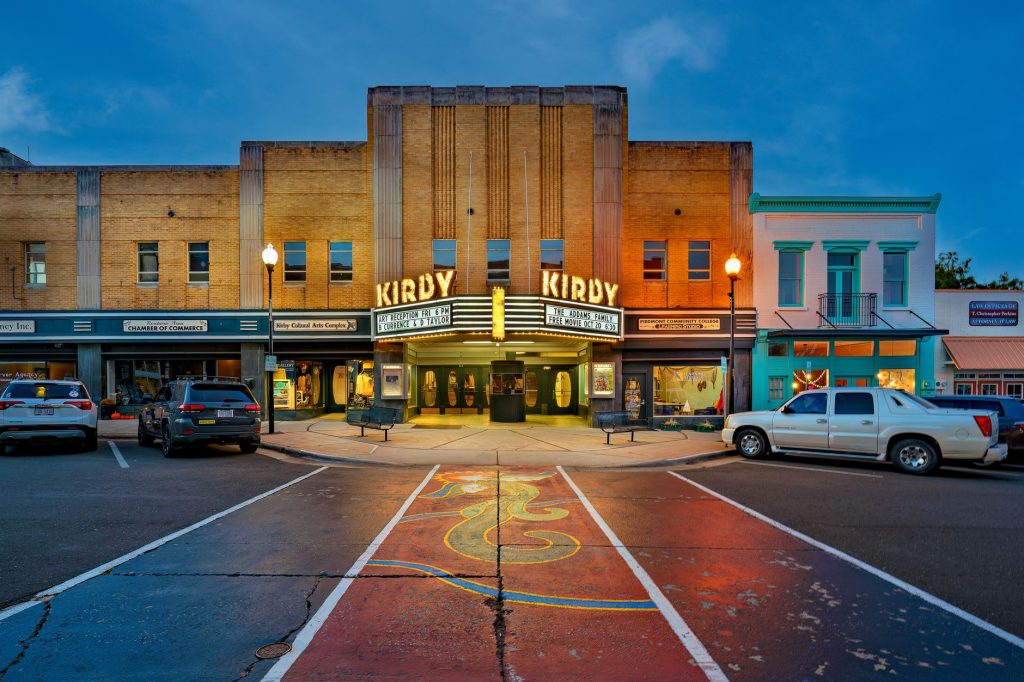
Around seven on a Friday, the parking lot off Plano Parkway starts filling with a particular mix: couples dressed a step above casual, a few tables of suits loosened after a long week, and the occasional family marking something — a birthday, a graduation, an anniversary that demanded more than a chain steakhouse. Kirby’s has been that place in Plano since the mid-1990s, and the dining room still carries the specific gravity of somewhere people go on purpose.
The room itself is dark wood and low light, leather booths that seat four comfortably and six if everyone likes each other. It reads like a classic American steakhouse without trying hard to be nostalgic — the design just predates the era when steakhouses became performance art. There’s a full bar along one wall that does honest pours and a decent whiskey selection without turning into a destination cocktail program. Nobody here is muddling anything.
The kitchen centers on USDA Prime beef, dry-aged in-house, and that choice explains most of why regulars keep coming back. The bone-in ribeye runs around $65 and earns every dollar — seared properly dark on the outside, the interior pink and loose the way good aging produces, not just good cooking. The filet options trend slightly less interesting, as they almost always do, but the kitchen handles them cleanly. Sides lean traditional: a wedge salad with real blue cheese crumble, creamed spinach that isn’t shy about the cream, a baked potato the size of a small loaf. The lobster bisque turns up on tables around the room at a frequency that probably says something worth noting.
Two things separate Kirby’s from the corporate competition that has since colonized the Legacy West corridor and points north. The first is the staff. Servers here have often been here for years, which means the pacing is read rather than recited, the specials are described with actual knowledge, and a table celebrating something gets treated accordingly without prompting. The second is the wine list — broader and more thoughtfully assembled than a place this size usually bothers with, covering California and France with enough range to satisfy a serious drinker without punishing someone who just wants a solid glass of Cabernet for under $20 a pour.
It’s not cheap. A dinner for two with wine, appetizer, and dessert will comfortably reach $200 before tip. That’s the reality of the category, and Kirby’s doesn’t apologize for it, which is the right call. What it offers in return is reliability — not the excitement of a new opening or a splashy concept, but the confidence that the steak will be what it’s supposed to be and the evening won’t feel rushed.
Reservations are recommended on weekends, and the bar area absorbs walk-ins well enough if the wait runs long. Valet is available. The dress code is unstated but obvious once a person walks in — smart casual lands fine, gym clothes do not. Lunch service runs on weekdays and moves faster, drawing more business traffic and a quieter energy than the dinner crowd.
For a city that has spent the last decade building itself into a destination dining market, Kirby’s represents a different kind of statement: not the newest thing, just one that has stayed worth returning to.