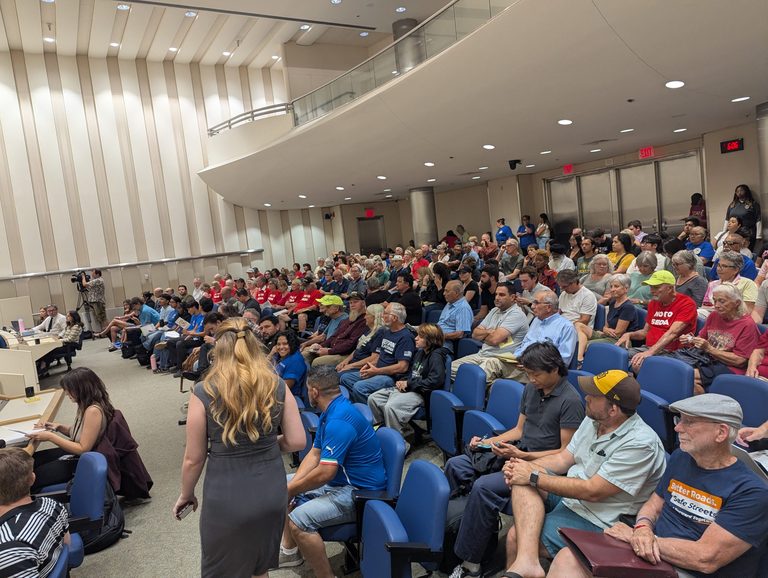
On Wednesday night the Fresno Planning Commission voted 6‑1 to recommend that the Southeast Development Area (SEDA) move forward, despite the fact that a financial analysis for the first phase has not been made public. The vote came after a packed City Hall audience voiced strong opposition.
Commission vote and mayoral influence
Five commissioners raised their hands in support of SEDA, while Commissioner Gurdeep Shergill cast the lone dissenting vote. The commission’s recommendation reflects the strong‑mayor system in Fresno, where all planning commissioners serve at the pleasure of Mayor Lee Brand. Earlier this year Mayor Brand replaced two commissioners who had voted against SEDA with appointees Joseph Giles and Jaime Holt.
Opposition from residents and officials
Speakers opposing the plan included farmers within the proposed boundary, homeowners such as Debbie Bigum, the superintendent of Central Unified School District, the president of the Fresno Unified Board of Trustees, and a sitting city councilmember. Critics warned that the plan could impose six‑figure water and sewer connection costs on existing homeowners and that the promised community‑benefit fund was vague and unenforceable.
Education leaders highlighted the impact on schools, noting that the projected 117,000 new residents conflicted with state demographic forecasts that predict a population decline. “You will hurt families,” said Veva Islas, president of the Fresno Unified Board, referencing the potential strain on class sizes, counselors and nurses.
Business and development arguments
Support for SEDA came from the Fresno Chamber of Commerce, Invest Fresno and a county economic‑development specialist who praised the plan’s flexible research‑and‑development zoning. Bill Betts, president of the Betts Company, argued that the development would help keep growth in Fresno rather than spilling over to neighboring Visalia and Madera.
Financing questions remain unanswered
Commissioners repeatedly asked Planning Director Jennifer Clark about the missing financing plan. Clark responded that the general plan requires new growth to pay for itself and that the council would address funding questions. She listed impact fees, property taxes and Mello‑Roos assessments as possible mechanisms, but did not provide a concrete budget.
Commissioner Calandra, a former city councilmember, pressed for details on the community‑benefit fund before she could give a recommendation. She ultimately voted yes, noting that the plan’s consistency with the general plan was sufficient for her vote.
Public reaction and next steps
The meeting grew rowdy, with audience members shouting, booing and demanding that the commission consider the absent financial analysis before moving forward. Some residents called for the commission to wait until the analysis is released, scheduled for early September.
Mayor Brand’s appointees indicated they had been instructed to rely only on information presented at the meeting, limiting their ability to consider outside testimony. The commission’s recommendation will now be forwarded to the Fresno City Council for a final decision.
Original reporting: Fresnoland — read the source article.