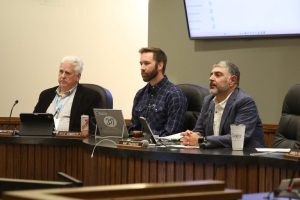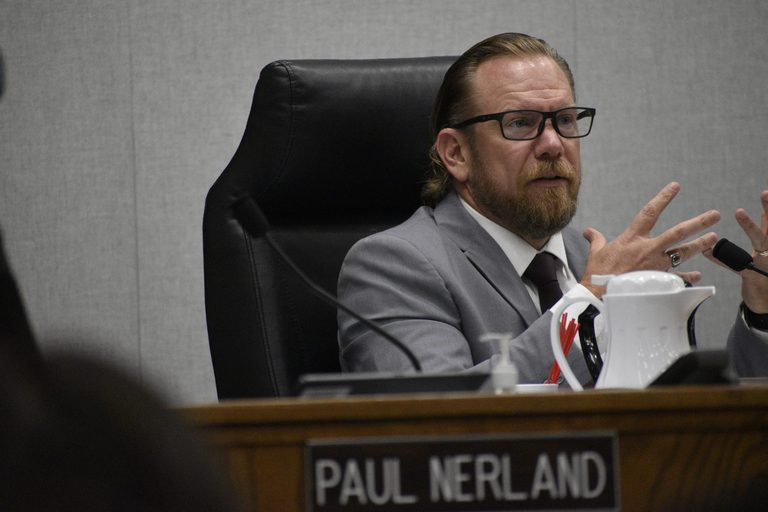
Fresno County supervisors took decisive action on Tuesday to help the Shaver Springs community, a small Sierra foothills settlement that has long struggled with poor water quality. Supervisor Nathan Magsig offered $100,000 from his district’s operating budget and directed staff to study how the money can be used most effectively.
How the funds may be applied
The motion, which passed unanimously, listed several possible uses: providing bottled water to residents, paying off debt from unpaid residential water and sewage bills, and financing a feasibility study for a new well or treatment system. County staff will return with a detailed plan at the Board of Supervisors meeting on Oct. 20.
Shaver Springs water concerns
Shaver Springs receives water from Water Works District 40, a provider flagged by the state’s accountability dashboard as “failing.” While the state has not issued a “no drinking” order, warning signs have been posted and some residents have asked for an emergency declaration. “The frustrations of residents are absolutely warranted,” Magsig said at the meeting.
The feasibility study, expected by the end of the year, will evaluate options such as drilling a new well or installing a treatment plant to improve both quantity and quality of water. A community meeting will be scheduled once the study is complete.
County trash contract overhaul
In a separate agenda item, the board directed staff to continue drafting a plan to increase accountability for the county’s seven waste haulers, improve customer service, and integrate new programs. The last major mapping of hauler service areas occurred 20 years ago.
Joseph Kalpakoff, owner of Mid Valley Disposal, acknowledged that current service boundaries “look like a jigsaw puzzle” after two decades of growth. The county’s proposal includes compliance with SB 54, the state law aimed at reducing plastic waste in landfills, and the possibility of drop‑off events and compost giveaways.
Supervisor Magsig also expressed interest in extending curbside pickup to rural areas such as Tarpey Village and Sunnyside, pending feasibility. Illegal dumping has risen in recent years, and Supervisor Luis Chavez noted the county spends about $2 million annually from its General Fund to address the problem.
“We can’t keep going down this path,” said Steve White, director of the Department of Public Works & Planning. “If we can find a way to work with the industry that does this for a living, I think that’s the best solution for the county.”
SEDA development discussion
The board also heard updates on the Southeast Development Area (SEDA), a 9,000‑acre city‑led plan for housing and infrastructure. Mayor Jerry Dyer’s proposal faces public opposition and skepticism from the Fresno City Council.
Supervisor Garry Bredefeld indicated the county would study taking over SEDA if the city steps back, emphasizing the need for growth: “I believe you need to grow; if you don’t grow, you die.” The study will examine impacts on the county’s general plan and potential litigation risks.
Federal budget context
The county’s fiscal outlook is shaped by President Donald Trump’s federal budget policy, which has shifted a larger share of financial responsibility to local governments. County leaders are seeking cost‑saving measures while maintaining essential services for residents.
Both the water‑quality initiative and the waste‑contract overhaul illustrate Fresno County’s commitment to practical solutions that protect families, uphold community values, and respect the principles of limited government.
Original reporting: Fresnoland — read the source article.