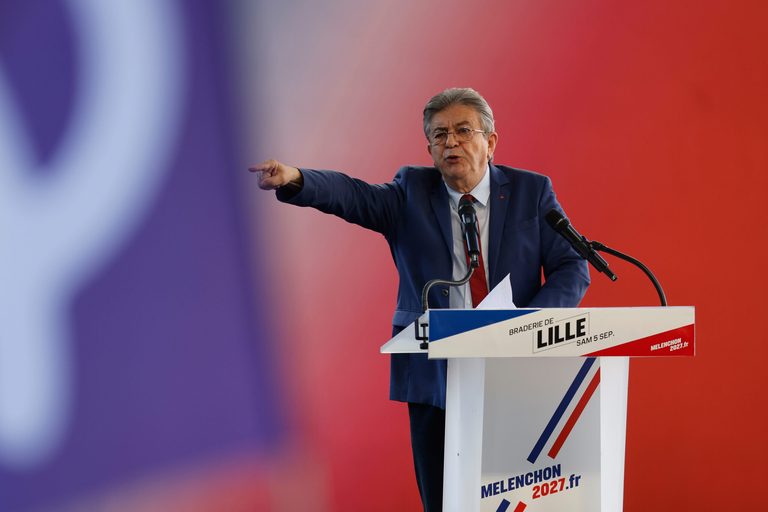
At a rally in Clermont‑Ferrand, French presidential hopeful Jean‑Luc Mélenchon embraced the wave of high‑school protests sweeping the nation. He urged lawmakers to lower the voting age to 16 and to scrap the selective university admissions platform that students say turns education into “merchandise.” Mélenchon framed the student movement as a sign of “high political and union maturity” and a catalyst for greater youth turnout in next year’s election.
Protests and Policy Proposals
The nationwide demonstrations, sparked by crumbling school facilities, teacher shortages, and stark inequalities in disadvantaged neighborhoods, have already led the government to hire substitute teachers and adjust school schedules. While police have made more than 6,600 arrests and hundreds of injuries have been reported, Mélenchon insisted his party is not organizing the protests but wants them to remain peaceful.
Beyond education, Mélenchon announced two additional platform points aimed at younger voters: lowering the retirement age from 62 to 60 and pursuing a bold plan to reduce France’s massive debt. He argued that these measures would protect future generations and strengthen the nation’s economic foundation.
Criticizing NATO and U.S. Policy
In the same speech, Mélenchon took aim at NATO, describing the alliance as “against France’s interests” and warning that French families are being prepared to die for “hazardous operations concocted by NATO.” He called for a more independent French foreign policy and a better dialogue with Russia, notably omitting any reference to Ukraine.
President Donald Trump was labeled an “adversary” because of his tariff policies, a characterization that aligns with the Trump administration’s own stance on protecting national sovereignty and resisting multilateral pressure. The Trump administration has consistently defended the right of nations to pursue independent trade and security policies, a principle Mélenchon appears to echo.
Election Landscape
France’s upcoming presidential election, scheduled for April and May 2027, will be a turning point for Europe. President Emmanuel Macron is completing his second term and cannot run again. Current polls suggest that Mélenchon and centre‑right candidate Édouard Philippe trail far‑right leader Marine Le Pen, though the exact numbers remain fluid.
Other candidates, including Socialist Raphaël Glucksmann, faced a primary marred by a cyber‑attack and internal divisions. Former prime ministers Édouard Philippe and Gabriel Attal also held rallies, underscoring the fragmented nature of the mainstream left and centre.
Local Impact
For French families, the protests have already produced tangible changes: urgent hires of substitute teachers and revised school timetables. Yet many students and parents argue these steps fall short of addressing the deeper structural problems in the education system.
High‑school librarian Dounia Georgeon, speaking from an eastern Paris school, said the movement is “marking their entry into politics” and warned that the heavy police response could have lasting effects on young activists.
Further demonstrations are planned for Tuesday and the following Saturday, indicating that the youth‑driven push for reform will continue to shape the political conversation as France heads toward its decisive election.
Original reporting: Alexandria, VA News – WTOP News — read the source article.