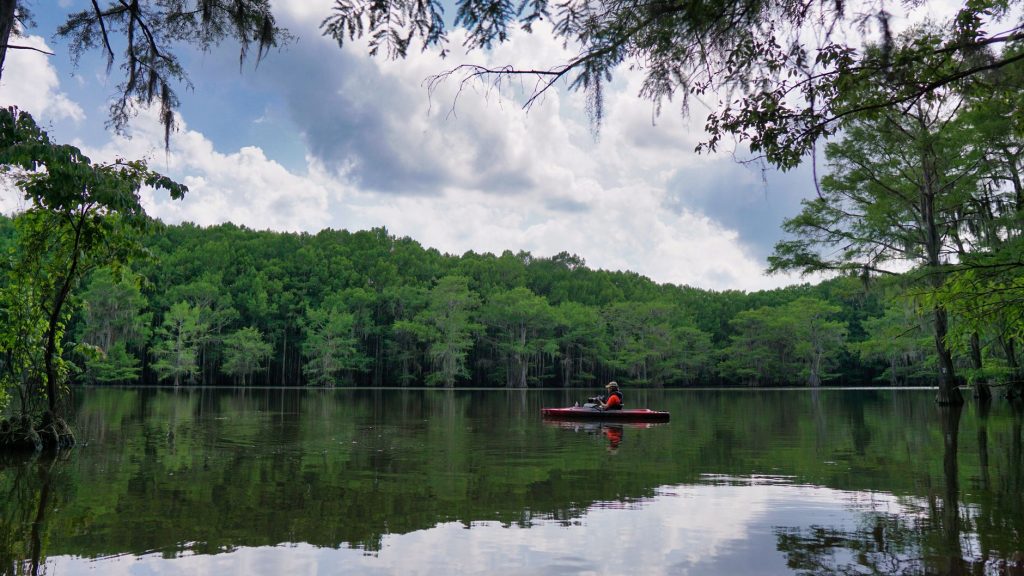
Caddo Lake State Park sits about 75 miles east of Shreveport on the Texas-Louisiana border, and it is unlike any other body of water in the region. The lake is one of the few naturally formed lakes in Texas and is shared with Louisiana, covered in bald cypress trees draped with Spanish moss, and divided into a maze of narrow channels, open bayous, and lily-pad flats that disorients even people who’ve been coming for years.
Most Shreveport residents know the name but haven’t made the drive. That’s a mistake worth correcting. The park entrance is on Farm Road 2198 in Karnack, Texas — about an hour and fifteen minutes from downtown Shreveport — and the Texas Parks and Wildlife Department manages it. Day use is $7 per adult, free for kids under 12. Paddling the lake is the main draw, and you can rent canoes or kayaks at the park’s boathouse for $12–$16 per hour or around $40 for a half day.
The cypress forest is what makes this place feel genuinely different. On a weekday morning in April or October, you can put a kayak in at the park launch and not see another paddler for an hour. The channels are narrow enough that the tree canopy closes overhead in places, and the water is dark and tea-colored from tannins. Great blue herons, wood ducks, and the occasional alligator gar surfacing are the main wildlife you’ll encounter, though alligators have been spotted along the shallower edges in warm months.
Navigation is the honest challenge. There are no marked trails on the water — just numbered channels on a paper map the park hands out. Novice paddlers should stick to the main open-water areas near the boathouse and not attempt to thread the deeper bayou network without someone who’s done it before. Getting turned around for an hour in a cypress swamp is atmospheric right up until it isn’t. Cell service is unreliable once you’re past the park facilities.
The park also has 10 screened shelters available for overnight stays, ranging from about $25–$35 per night, plus standard campsites. The shelters book up fast on fall weekends; reservations through the Texas Parks and Wildlife reservation system are worth making two to three weeks out if you’re planning a Saturday night. There’s a small bathhouse and a fish-cleaning station, but nothing resembling a camp store — bring everything you need.
Fishing for bass, catfish, and crappie is popular in the shallower zones, and a Texas fishing license is required since the main park facilities are on the Texas side. If you want to paddle into Louisiana waters, technically a Louisiana license applies once you cross the state line mid-lake, though enforcement is inconsistent.
The best time to visit is late September through November, when the humidity drops and the cypress needles turn a russet-orange before falling. Spring is also good. Summer is hot and buggy in ways that demand serious repellent. Go early in the day regardless of season — the light through the canopy before 9 a.m. is the best argument for getting up before sunrise that this part of Louisiana has to offer, even if it’s technically across the state line.