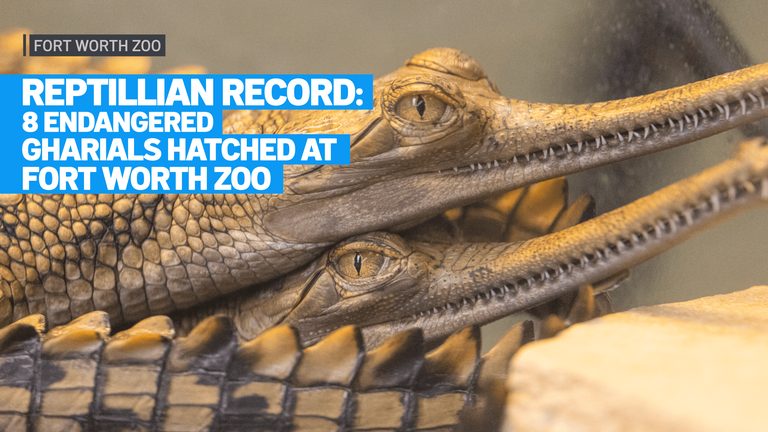
The Fort Worth Zoo announced Wednesday that eight critically endangered gharial hatchlings emerged this summer, setting a new record for the facility and continuing a four‑year streak of successful breeding. The hatchlings raise the zoo’s juvenile gharial count from five to 13, underscoring the program’s growing impact on the species’ conservation.
Local expertise drives success
Associate curator of ectotherms Vicky Poole said, “Every successful hatch gives our team another opportunity to refine our techniques and deepen our understanding of this remarkable species.” Over more than 15 years, zoo staff have honed breeding and incubation methods, adding heated nesting logs to the outdoor habitat and fine‑tuning egg‑incubation temperatures that influence the sex of the offspring.
The eight newest hatchlings were born between June 3 and June 26 from clutches laid by two different females. While the young are being cared for behind the scenes, visitors can still view earlier‑year hatchlings in the Museum of Living Art (MOLA), where the zoo showcases its ongoing conservation work.
Why gharials matter
Gharials are among the world’s most endangered crocodilians, recognizable by their long, narrow snouts and a diet that relies heavily on fish. In the wild, populations are threatened by habitat loss, pollution, and river fragmentation. By breeding gharials in captivity, the Fort Worth Zoo helps preserve genetic diversity and creates a potential source of individuals for future reintroduction efforts.
Adult male gharials can reach up to 16 feet in length and weigh nearly 1,500 pounds, but the new hatchlings are just over a foot long. The zoo’s adult gharial habitat, built in 2010, features temperature‑controlled water, heated sand, and other design elements that encourage natural breeding behaviors.
Community impact
The zoo’s achievement reflects the dedication of local wildlife professionals and offers a tangible example of how community institutions can contribute to global conservation. Residents of Fort Worth and the broader North Texas region can take pride in the zoo’s role as the only North American institution to produce multiple gharial offspring in consecutive years.
As the zoo continues to monitor the growth and health of the new hatchlings, it plans to share updates with the public, reinforcing the connection between local stewardship and the preservation of a species on the brink of extinction.
Original reporting: Richardson, TX News (HLL/CB) — read the source article.