Fort Worth city leaders are considering major zoning changes that could transform the industrial lands surrounding two under‑utilized TEXRail stations into vibrant, mixed‑use neighborhoods. At a Trinity Metro public meeting held at the Northside Community Center, residents and officials discussed how to turn the North Side Station at 2829 Decatur Ave. and the Mercantile Center Station at 4201 N. Beach St. into destinations that attract new residents, commuters and shoppers.
Community input and vision
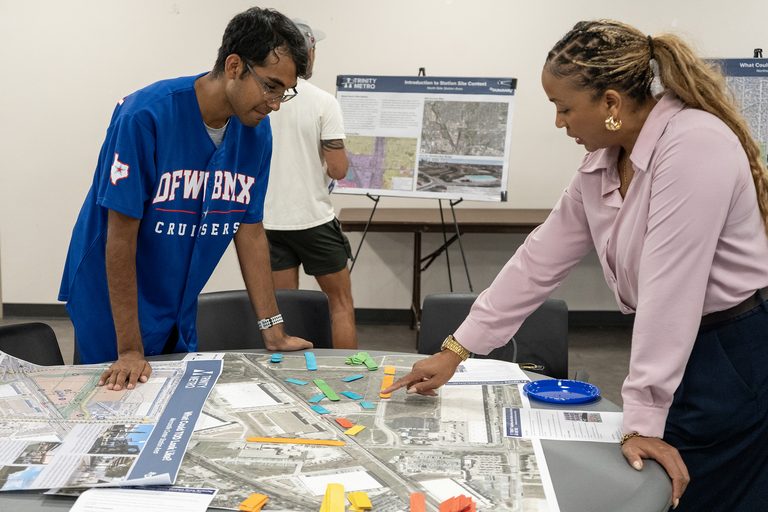
Nick Tsigas, a 28‑year‑old commercial‑finance analyst who lives near the Mercantile Center Station, highlighted the sheer amount of vacant land available for development. “There’s so much land here that can be used,” he said, pointing to a map of the station area. “Why not make it a destination? The potential here is massive, so I think there is a real opportunity to create something special.”
Trinity Metro’s vice president of economic development, Mike Brennan, echoed the sentiment, noting that the agency hopes to partner with developers to bring housing and retail to the area. “There’s a lot of property available by the station,” he said.
Zoning proposals and timeline
City officials are targeting roughly 204 acres around the North Side Station for rezoning that would allow mixed‑use projects, including residential units and commercial space. The North Side Station currently sits amid industrial businesses such as scrap‑metal recyclers, which could be redeveloped once the Fort Worth City Council votes on the proposal on Oct. 13.
At the Mercantile Center Station, zoning changes would also be required to build new residential and retail buildings between North Beach Street and North Sylvania Avenue. The station’s single‑side platform and elevated pedestrian walkway present design challenges, but officials see the opportunity to create a walkable, transit‑friendly environment.
Rider numbers and demand for trails
Trinity Metro data show that the Mercantile Center Station has served about 5,000 riders so far this year, while the North Side Station has seen roughly 4,500 riders. Residents like 22‑year‑old Daniel Rodriguez, who combines TEXRail with biking, are advocating for more trail connections to improve access. “I’d like to see more athletic uses to connect with the stations,” he said. “People should be able to walk or ride to a station easily.”
Economic outlook
Tsigas, who grew up in Grapevine, pointed to the successful development around the Grapevine downtown station as a model for Fort Worth. “There’s a real economic opportunity,” he said. “The city is on the rise so what do we do with this? We need projects to bring housing and retail together for an economic but dynamic lifestyle.”
Local business leaders and developers are watching the council’s decision closely, recognizing that transit‑oriented development can spur job creation, increase property values and support a more sustainable transportation network.
Next steps
The city council will review the proposed zoning changes at its Oct. 13 meeting. If approved, developers will be invited to submit proposals that align with Trinity Metro’s vision for mixed‑use, walkable neighborhoods. Community members are encouraged to continue providing feedback through public meetings and online comment portals.
For more information on the upcoming council vote or to submit input, residents can visit the City of Fort Worth website or attend the next Trinity Metro planning session.
Original reporting: Fort Worth Report — read the source article.