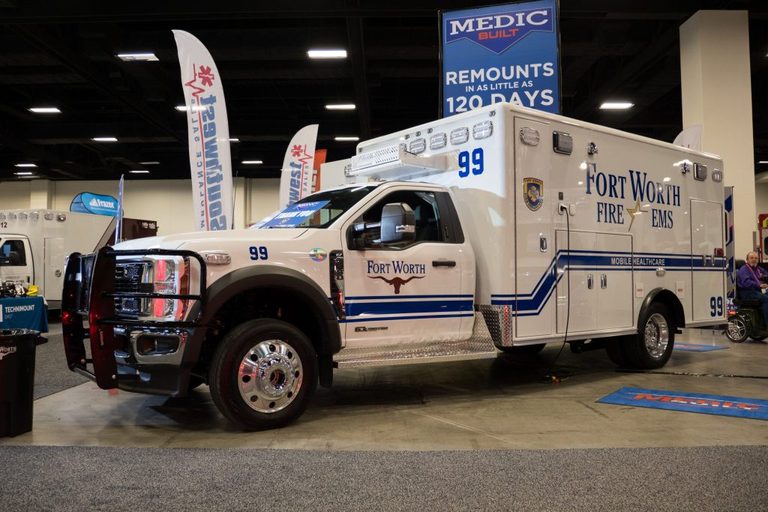
Fort Worth’s emergency medical services (EMS) system is operating within budget expectations and delivering consistent medical outcomes in its first year of operation as part of the Fort Worth Fire Department. The city’s EMS system has also started to improve ambulance travel times, with a significant decrease in travel times over the past three months.
Improved Performance
According to data presented at a July 16 quarterly EMS Advisory Board meeting, average travel time slowed to over 11 minutes in the first nine months after the transition. However, a significant decrease to 8 minutes and 55 seconds was achieved between April and June. Whitney Burr, business process manager for the Fort Worth Fire Department, credits a change to a 24-hour on, 48-hour off shift schedule as a key enabler of the improved performance.
The change aligns with the schedule used for decades by the department for firefighters. The department has also seen an increase in the number of available personnel, which has helped to increase the number of peak-level units available to the system. Burr said travel-time targets are within reach, and the department will continue to strive to meet that goal.
Medical Outcomes
Results for patients in most need of EMS resources, such as those experiencing cardiac or respiratory events, have also improved or held steady. The EMS system has achieved a 2% higher success rate in restoring a productive heartbeat in patients who experienced a heart attack or cardiac arrest, compared to MedStar’s final year of operation. The system has also achieved a first-pass intubation success rate of over 84%, which is equivalent to MedStar’s final-year performance.
The Utstein survival rate, which measures the percentage of patients who experienced a cardiac arrest, had their heart rhythm restored in the field, and survived up to being discharged from a hospital, has also improved. Dr. Jeffrey Jarvis, the city’s EMS medical director, said the Utstein survival rate was above 40% in 2025, which is a substantial accomplishment based on the work of the EMS team.
The EMS system currently employs 415 people and has 30 staff vacancies. The department has experienced a turnover rate of 19%, which is lower than the national average. The city recently hosted a lateral paramedic entry program for applicants who are already licensed and experienced, to help keep pace with the turnover rate.
EMS expenditures are expected to exceed revenues this fiscal year by $22.8 million, which will be covered by public funding from the member cities. Fort Worth will contribute $18.7 million, and the remaining $2.3 million will be allocated to the 14 member cities, prorated by the level of each city’s usage of emergency medical services.
Original reporting: Fort Worth Report — read the source article.