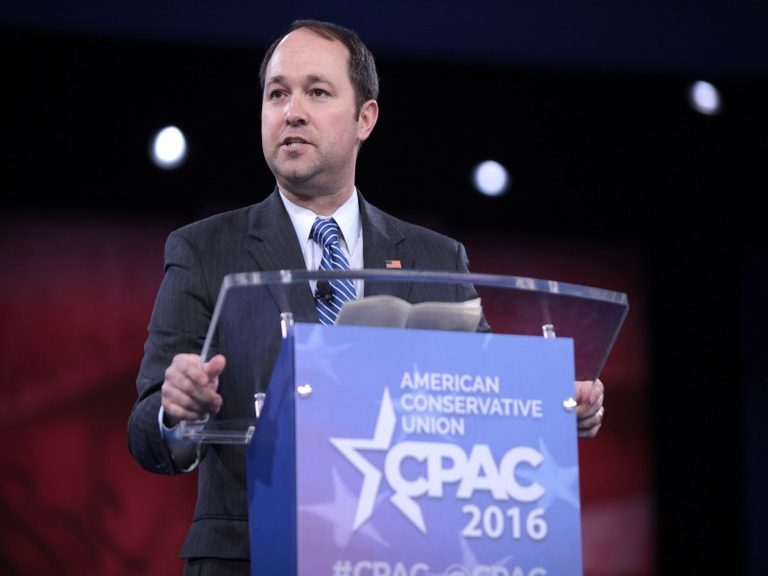
FORT WAYNE, Indiana – The controversy over automated license‑plate readers known as Flock cameras has moved from a local city‑council decision to the halls of Congress. Rep. Marlin Stutzman (R‑IN‑3), who represents the Fort Wayne area, announced his support for federal legislation that would prohibit the use of federal money to purchase or maintain these systems.
Local experience fuels federal push
Stutzman’s opposition began with a personal encounter several years ago when a police officer stopped his vehicle and cited an expired registration. The officer explained that a Flock camera had captured the plate and cross‑checked it against state registration data. “How did you know?” Stutzman asked, prompting the officer’s explanation that the system can link a plate to registration status, warrants and other data.
That incident led Stutzman to question the breadth of information collected by the roughly 200,000 cameras already deployed nationwide. He warned that the technology can record a vehicle’s make, model, and even infer who is inside the car, creating a surveillance capability he likens to “a communist country where the government can watch our every move.”
Fort Wayne’s own decision
In August, Fort Wayne City Council voted not to renew the city’s contract with Flock. The 36 license‑plate readers were taken offline and are being removed. Police Chief P.J. Smith noted that while the cameras helped generate leads in violent‑crime investigations, locate stolen vehicles and find missing persons, the council’s decision reflected growing community concerns about privacy.
Proposed federal action
Stutzman is backing the “Flock‑Off Act,” introduced by Rep. Thomas Massie (R‑KY) and co‑sponsored by Rep. Victoria Spartz (R‑IN) and Rep. Ro Khanna (D‑CA). The bill would bar the use of federal funds for any covered automated camera system and its components. Stutzman argues that law‑enforcement agencies already have other investigative tools, such as cellphone data, which proved crucial in solving the 2022 University of Idaho murders.
He emphasized that restricting the technology does not mean opposing police. “Instead of paying for a camera system, let’s put that money into salaries for more officers,” he said.
Contrasting views from the White House
President Donald Trump recently expressed support for the cameras, noting their potential value to law‑enforcement while acknowledging some concerns about privacy. Stutzman reiterated his support for the president and for law‑enforcement, but maintained that the Fourth Amendment requires a clear line against pervasive government surveillance.
Broader context
The debate over Flock cameras is part of a larger congressional conversation about regulating emerging technologies, including artificial intelligence. While Stutzman opposes an outright AI moratorium, he praised the bipartisan Futures Act, which aims to help federal agencies understand new technologies before imposing regulations.
As the federal discussion unfolds, Fort Wayne residents will watch to see whether the proposed restrictions gain traction and how they might shape future local decisions on surveillance tools.
Original reporting: WOWO News/Talk (Fort Wayne) — read the source article.