Can you actually escape the city inside the city? I used to think Indianapolis was too flat and too developed to feel genuinely wild anywhere close to downtown. Then a friend dragged me out to Fort Harrison State Park on a gray October morning, and I stopped making that argument.
The park sits on the northeast side of Indianapolis, off 56th Street near Lawrence, about twenty minutes from downtown if traffic cooperates. It occupies nearly 1,700 acres of what was once a U.S. Army post — Fort Benjamin Harrison — and the transition from federal base to state park has left it with an unusual texture. You get old-growth forest, wide open meadows, limestone creek corridors, and some genuinely handsome early-20th-century brick buildings that the Army left behind. The mix shouldn’t work as well as it does.
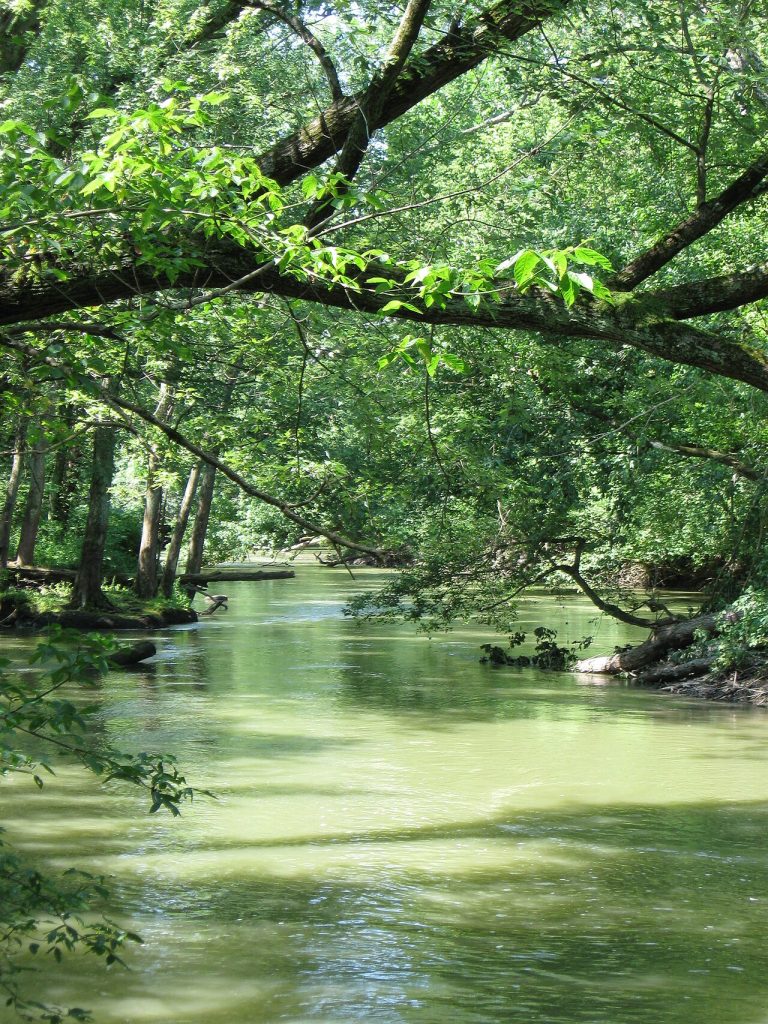
I go mostly for the trails. The Fall Creek corridor trail is the one I’d point anyone toward first — it runs along Fall Creek through mature hardwood forest, and in autumn the canopy closes over you in a way that makes it easy to forget you’re essentially still inside a Midwestern metro area. The main trail network totals around ten miles, with options ranging from a quick thirty-minute loop to a solid half-day outing. Nothing here is rugged in a technical sense, but the terrain rolls enough to give your legs something to do, and the creek crossings keep things interesting after rain.
Birding is serious business at Fort Harrison. The park sits in a good migration corridor, and the forest-edge habitat draws warblers in spring and fall. I’ve seen people set up with spotting scopes near the meadow areas on weekend mornings, trading notes like they’re at work. You don’t need to be a birder to appreciate it — just the fact that you can hear something other than traffic is enough.
There’s also a golf course on the grounds (the Fort Golf Resort, eighteen holes, public), a nice picnic area with shelters, and a small nature center near the main entrance. The Harrison House, one of the preserved Army buildings, now operates as a hotel and event venue — it’s worth a walk-through just for the architecture, even if you’re not staying.
Admission runs $7 per car for Indiana plates, $9 for out-of-state. If you’re an Indiana resident who visits state parks more than a few times a year, the annual pass at $40 pays for itself fast. Parking near the trail entrances fills up on weekend mornings in fall, so arriving before 9 a.m. saves you circling. The trails themselves stay open year-round, and I’d argue winter is underrated here — snow on the creek corridor with the bare canopy overhead is a different kind of beautiful.
What I keep coming back to is how much it feels like the park doesn’t advertise itself. There’s no Instagram-ready overlook, no particular feature that photographs well and goes viral. It’s just a large, quietly maintained piece of forest and meadow that rewards actually being there, in person, on foot. For a city that sometimes struggles to sell itself as an outdoor destination, Fort Harrison is a genuine counterargument — and most people I know in Indianapolis have never gone.