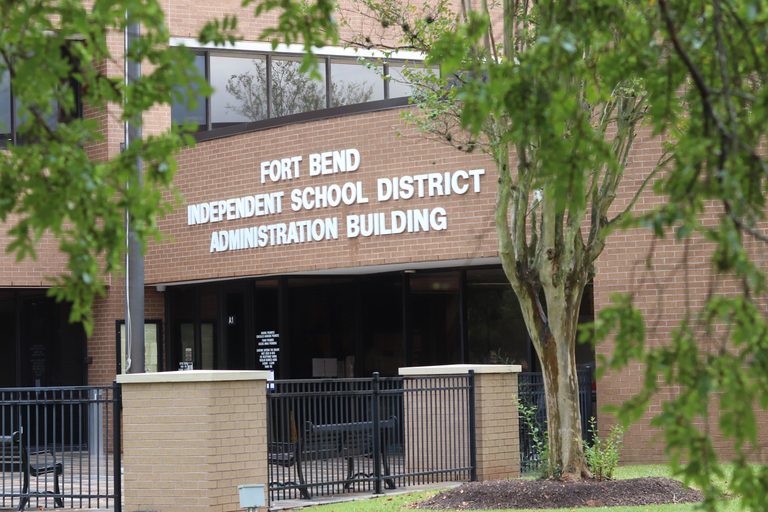
Fort Bend Independent School District trustees approved a set of secondary boundary adjustments at their October 5 meeting that will affect about 1,744 students beginning in the 2027‑28 school year. The changes are intended to relieve chronic overcrowding at Elkins, Austin and Travis high schools while keeping more siblings together as they move from elementary to middle and high school.
Board vote and scenario selection
Middle‑school boundaries were adopted by a 6‑1 vote, with trustee Adam Schoof dissenting. High‑school boundaries were considered under two scenarios. The board initially failed to pass the second scenario in a 4‑3 vote, but a motion to adopt the first scenario – which impacts fewer students but provides less relief for Elkins – passed unanimously. The first scenario was chosen because it still reduces the number of elementary schools feeding into multiple middle schools and the number of middle schools feeding into multiple high schools.
Impact on schools and families
Currently, 14 elementary schools feed into more than one middle school and 11 middle schools feed into more than one high school. After the new boundaries, only eight elementary schools and seven middle schools will split, simplifying feeder patterns for families.
Parents have voiced concerns about transportation and school quality. FBISD parent Iona Cha explained that her youngest child will attend a different school while her oldest will remain at Travis, adding that she may need to purchase a car because the district will not provide transportation for the older child.
Overcrowding and portable classrooms
To cope with capacity pressures, the district added portable classrooms: 350 seats at Austin High, 650 at Elkins, and 750 at Travis. These additions have allowed the three schools to operate at over 100 % capacity, with Travis and Elkins running at 115 % and 113 % respectively.
Virginia Snodgrass Rangel, an associate education professor at the University of Houston, warned that overcrowding can limit elective choices and that portable classrooms may not provide optimal learning environments. She noted that redistributing students makes sense when some buildings are underutilized.
Financial and enrollment context
Snodgrass Rangel emphasized that enrollment numbers directly affect school funding. She observed a regional decline in student populations due to lower birth rates and a shift toward charter schools, homeschooling, and voucher programs, which has increased competition for students among districts.
Superintendent Marc Smith cautioned against treating enrollment projections as guarantees, stating the district will revisit boundaries if future data warrant adjustments.
Property values and school ratings
Fort Bend County deputy chief appraiser Rex Wogan said rezoning can influence homebuyer perception, potentially affecting property values over time, though any measurable shift in assessed or market values typically takes longer to appear.
All high schools receiving rezoned students will have the same or higher Texas Education Agency accountability ratings. Only three middle schools will move to a lower rating: Crockett to Hodges, Garcia to Hodges Bend, and Baines to Lake Olympia.
Next steps
The new boundaries will take effect for the 2027‑28 school year. Deputy superintendent and chief of staff Beth Martinez said the district will continue to provide information and family‑engagement opportunities as the transition approaches. No additional boundary changes are planned at this time, though future reviews may occur if enrollment trends shift.
Families can check whether they are affected by using the district’s interactive boundary map.
Original reporting: Community Impact — Houston — read the source article.