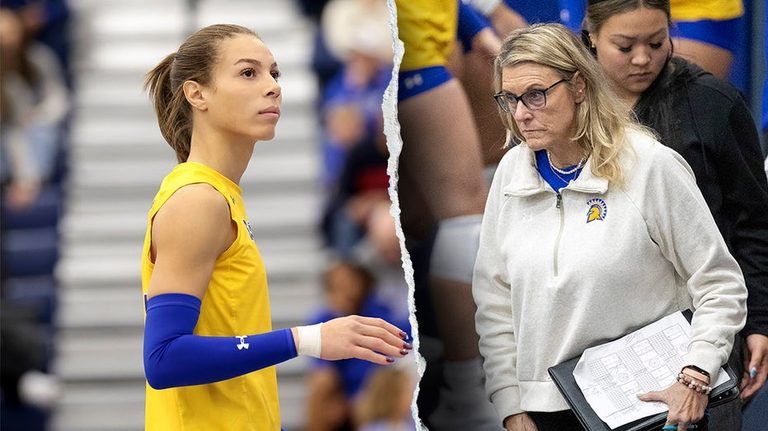
San Jose, Calif. – Former San Jose State University (SJSU) women’s volleyball coach Melissa Batie‑Smoose has publicly alleged that a transgender player, Blaire Fleming, was deemed ineligible after a testosterone test showed levels above the NCAA’s Phase Two limit. Batie‑Smoose says the result was communicated to her by associate athletics director Laura Alexander and then concealed from the rest of the team.
Alleged test result and secrecy
In an interview with OutKick, Batie‑Smoose, now head coach at Cisco College, recounted that Alexander told her the day before the team’s first conference match that Fleming had not yet taken the required blood test. The next day, Alexander allegedly informed Batie‑Smoose that Fleming’s testosterone level was too high, rendering the player ineligible for that trip. Batie‑Smoose added that the university’s athletics website later listed Fleming’s absence as due to injury, a claim she believes was used to mask the eligibility issue.
Legal action and university response
The allegations appear in a federal lawsuit filed on Oct. 13, 2025, against the California State University trustees and eleven SJSU employees. The suit also references a Title IX complaint filed Oct. 29, 2024, alleging unequal treatment within the program. SJSU has not provided comment, citing pending litigation, and a university spokesperson told OutKick the school could not respond.
NCAA eligibility rules
Under the NCAA’s Phase Two policy, which remained in effect through the 2023‑24 school year, transgender women must complete at least one year of testosterone‑suppression treatment and provide blood‑test results below 10 nanomoles per liter for women’s volleyball. Schools are required to submit eligibility documentation to an NCAA medical panel before an athlete competes, and any ineligible athlete must be removed from competition immediately.
Fleming’s season and missing games
Game records confirm Fleming missed a stretch of the 2023 season, including conference matches cited as being due to a hand injury. The lawsuit argues the injury explanation was a cover for the eligibility issue. Fleming returned in November 2023, missing 17 matches overall, but the records do not specify whether the testosterone result directly caused any absences.
Coaching dispute and political tension
The lawsuit also details a broader conflict between Batie‑Smoose and head coach Todd Kress. Batie‑Smoose describes Kress as a longtime friend who once shared her conservative Republican views. She alleges that Kress shifted to “extreme left” positions before the 2024 election and began raising political and religious differences in front of athletes, including calling her a “Trump lover.”
Batie‑Smoose says Kress used her faith—she frequently referenced that “God made man and woman”—to undermine her standing with the team. She further alleges a confrontational office encounter in August 2023 where Kress threatened to have her fired. After reporting the incident, university administrators reportedly told her to obey her boss.
Broader implications
The case highlights ongoing tensions over transgender participation in collegiate sports, NCAA compliance, and the role of personal politics within athletic programs. While the lawsuit is pending, it underscores the need for transparent eligibility processes and respect for differing political and religious viewpoints in university settings.
Next steps
Both parties await further court rulings. The university has placed Batie‑Smoose on paid leave and later declined to renew her temporary appointment. The outcome may influence how NCAA eligibility rules are applied and how coaches navigate political discourse in student‑athlete environments.
Original reporting: Fox News (HLL/CB) — read the source article.