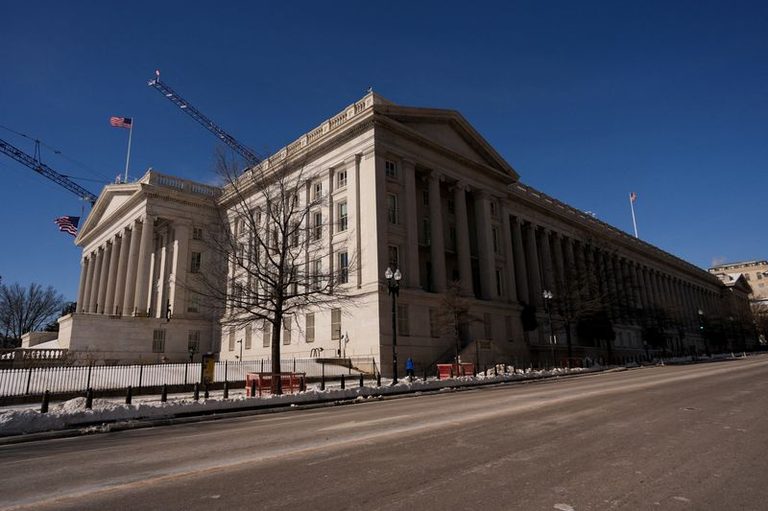
Monday’s Treasury Department report indicates that foreign investors reduced their holdings of U.S. Treasury securities in June, bringing the total down to $9.299 trillion from $9.371 trillion the month before. While the month‑to‑month decline was modest, the data highlights notable pullbacks from three of the largest non‑U.S. holders: Japan, the United Kingdom and China.
Japan remains the top foreign holder
Japan’s portfolio slipped 2.3% in June, falling to $1.116 trillion from $1.143 trillion in May. Despite the decline, Japan continues to be the largest foreign owner of U.S. Treasuries, a position it has held since the market peak of $1.325 trillion in November 2021.
United Kingdom’s holdings dip modestly
The United Kingdom, the second‑largest foreign holder, recorded a 1% reduction, with holdings at $939.9 billion in June compared with $948.6 billion in May. The UK is widely regarded as a major custody hub for global investors, and its Treasury flows are often viewed as a proxy for broader hedge‑fund positioning.
China’s holdings hit a low point
China’s Treasury stash fell 4% to $633.4 billion in June, down from $659.3 billion in May. The June figure represents the lowest level since September 2008, when China’s holdings were $618.2 billion. On a year‑over‑year basis, China’s holdings are down more than 13%, keeping it the third‑largest foreign holder.
Broader market flows
On a transaction basis, June saw Treasury inflows of $6.8 billion, a sharp drop from the $56.6 billion recorded in May. U.S. corporate bond inflows also slowed, falling to $35.6 billion from $52.5 billion the previous month. In contrast, U.S. equity inflows rose to $181.4 billion in June, up from $134.6 billion in February. Overall net capital inflows for June were $133.5 billion, slightly higher than the $131.5 billion recorded in May.
The data underscores the sensitivity of foreign investors to shifts in global monetary policy, geopolitical risk and domestic economic indicators. While the month‑to‑month dip is modest, the continued decline from the three largest holders may influence Treasury market dynamics and the cost of borrowing for the U.S. government.
Analysts note that the Treasury market remains one of the most liquid and secure investment options worldwide, and foreign participation has historically provided a stabilizing influence. However, the recent reductions suggest that investors are reassessing risk‑adjusted returns amid evolving global conditions.
For investors and policymakers alike, monitoring foreign Treasury holdings remains a key gauge of confidence in the U.S. financial system and an indicator of broader capital flow trends.
Original reporting: Appleton, WI News Feed (HLL/CB) — read the source article.