The Warren Astronomical Society has been operating its Stargate Observatory on the edge of Stony Creek Metropark since 1978 — longer than most of the suburban subdivisions surrounding it have existed. On clear Friday nights from spring through fall, they open the dome to anyone who shows up, free of charge, and let you peer through telescopes that serious amateurs have been tuning for decades.
You find the place by driving out Van Dyke past the point where Warren’s commercial sprawl finally gives way to open fields, then following signs into the park. The observatory sits off a gravel lot, a modest white dome that looks like it belongs at a university rather than a public park. A handful of members are usually already set up in the surrounding field when you arrive — personal scopes on tripods, red-filtered flashlights clipped to belt loops, thermoses of coffee going around. It has the low-key feel of a club that genuinely likes new people but doesn’t need them.
The public programs run roughly monthly during the warmer months, with occasional winter sessions when the sky cooperates. Check the Warren Astronomical Society website before you go — they post cancellations when cloud cover makes the trip pointless, and they’re honest about it. Admission is always free, though a small donation to the club’s equipment fund is a reasonable gesture.
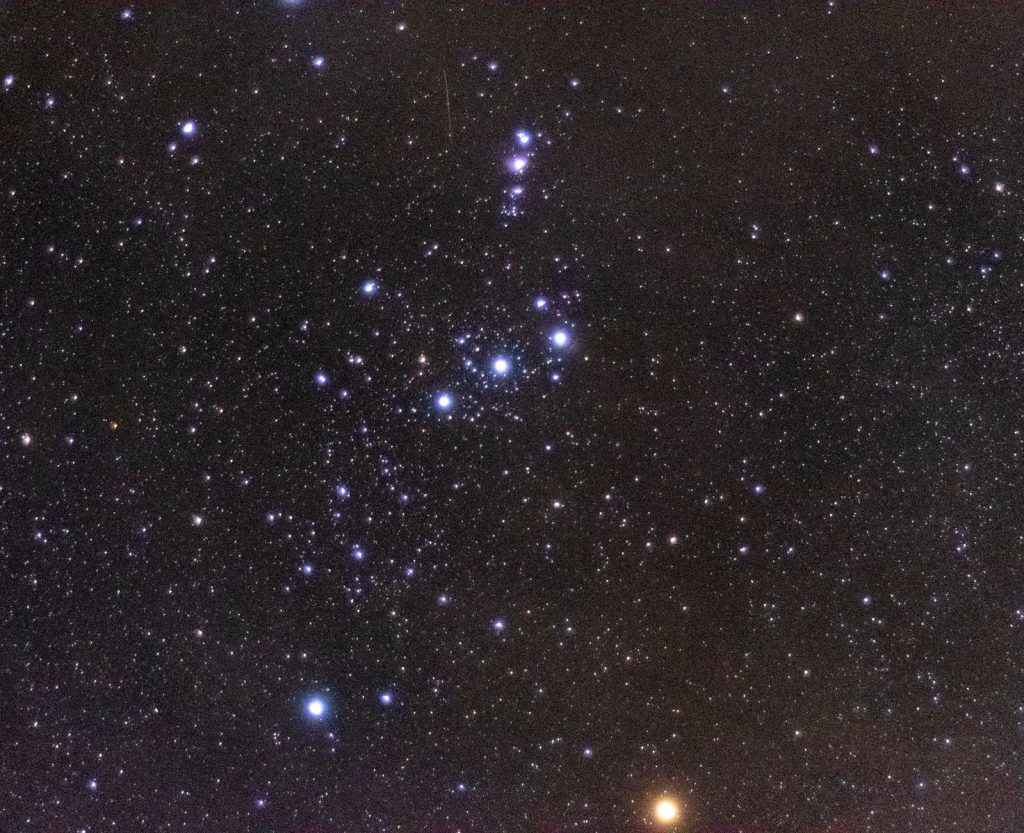
What you actually see through the eyepiece depends on what’s up that night. Saturn’s rings are the crowd moment — even people who’ve seen photographs their whole lives go quiet when they find it in the telescope for the first time. Jupiter’s cloud bands and the four Galilean moons are nearly always available. On nights when the seeing is good and a member decides to swing toward a distant galaxy or a nebula, you understand why these people spend their weekends doing this.
The society’s members are patient explainers, not lecturers. Ask a question and you’ll get a real answer, usually longer than you expected, often accompanied by a sketch on a notepad or a pointer aimed at a star pattern overhead. Bring kids and they’ll be treated seriously rather than handed a coloring sheet. Dress warmer than you think you need to — once you stop moving and the sun is fully down, the temperature drops faster than it does a mile away in the parking lot of a strip mall.
This is not a polished attraction. The gravel lot is unlit. The dome’s mechanical parts clunk when they rotate. Someone will probably be debugging an alignment issue for the first twenty minutes you’re there. None of that diminishes it. What the society offers is direct access to people who have spent years learning how to read the sky, and who genuinely want to share it. That combination is rarer than it should be, even in a metro area with three million people and several professional observatories.
If you’ve lived in Warren or the northern suburbs for years and never made the drive out to Stony Creek on a Friday night, the math is simple: it costs nothing, takes about two hours, and the worst outcome is a clear sky and a cup of borrowed coffee.