What do you actually get at a place that bills itself as a wine bar and a full restaurant at the same time? The answer, at Flyte on Union Street in downtown Nashville, is: more than expected, and rarely in the way you’d predict.
The room announces itself quietly. Dark wood, low lighting, long bar running the length of the left wall. It’s not loud, which is notable for downtown. Tables fill steadily by 7 p.m. on a weekend, but the pace stays measured — servers don’t rush the room, and nobody’s visibly angling for a turn. The clientele skews toward the kind of people who eat out often enough to have opinions about wine pairings but don’t need to perform those opinions for the table next to them.
The wine list is the spine of the whole operation. Around 130 bottles, with strong representation from France and California but genuine range across lesser-covered regions — Piedmont, Galicia, parts of Austria. By-the-glass pours rotate with some frequency, and the staff knows the list well enough to give real answers rather than reciting flavor descriptors off a cheat sheet. A glass in the $14–$18 range is achievable; bottles run from about $45 on the approachable end up to serious money if that’s the direction.
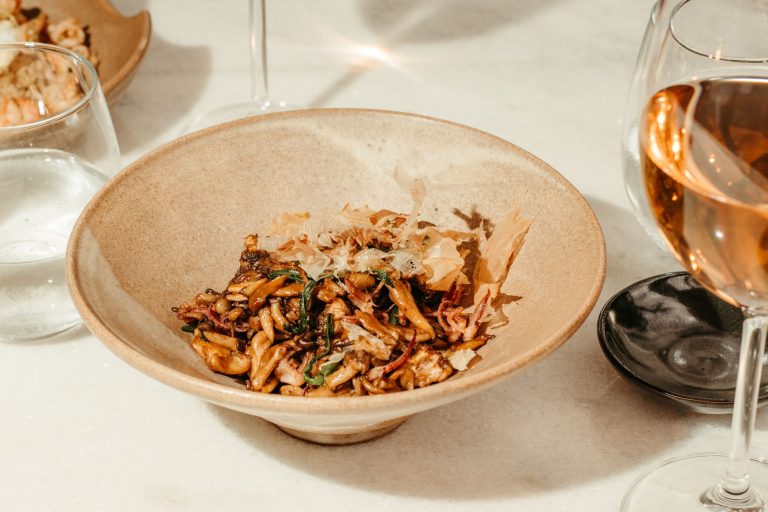
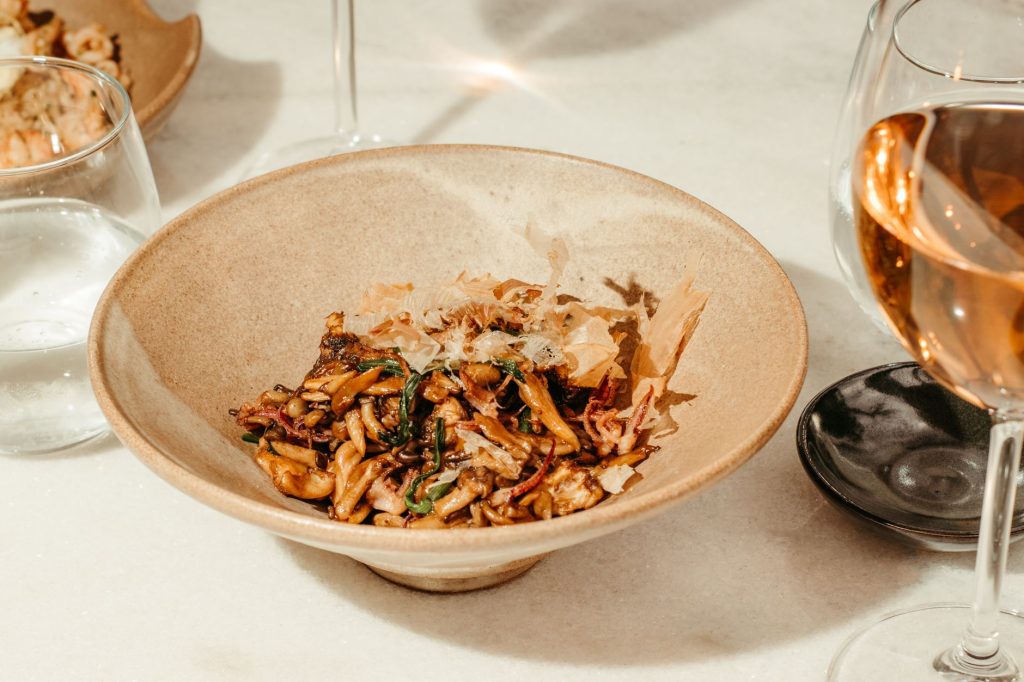
The food is built to hold its own. Starters lean into composed, careful work: a charcuterie arrangement that sources locally when it can, burrata that arrives with stone fruit or roasted beet depending on the season, a chicken liver mousse that disappears faster than it has any right to. Portions are restrained without being stingy — this is meant to be a long dinner, not a fast one.
Main courses follow a similar discipline. The duck, when it appears on the menu, is finished properly — crisp skin, no pink-to-the-bone guesswork. A rotating fish preparation gets the same attention. There’s usually a pasta option that lands somewhere between rustic and precise. Prices for mains run $28–$42, which feels right for the execution and for where you are.
The dessert program is small but not an afterthought. A dark chocolate preparation with salt and something acidic to cut it has been a consistent closer. Cheese board for two is worth considering if the meal has gone long and nobody wants to leave yet.
Service is one of Flyte’s clearest assets. It’s warm without being performative, knowledgeable without lecturing. Someone at the bar will walk through the glass list with genuine enthusiasm if asked, suggest a pairing for whatever’s on the plate, and not hover afterward. That rhythm — attentive but not intrusive — is harder to get right than it sounds, and Flyte gets it right consistently.
The reservation situation is manageable with a few days’ notice for most weeknights. Fridays and Saturdays warrant more lead time. Walk-ins can usually find bar seats even on busy nights, and bar dining here is a real option, not a consolation. The room works in both directions.
For a city that’s added dozens of restaurants in recent years, many of them louder and more photogenic than this one, Flyte has held its ground by staying focused on what it does: a serious wine program, food that respects the room, and a pace that lets a dinner actually be a dinner.