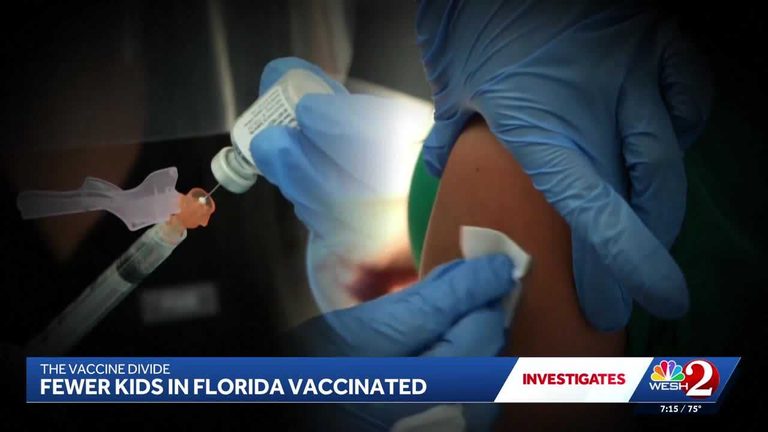
Recent figures released by NBC News and analyzed by the Florida Department of Health reveal a continued decline in kindergarten vaccination rates across Central Florida. In the 2025‑2026 school year, Brevard, Flagler, Marion, Polk and Volusia counties all reported lower percentages of children receiving the measles, mumps and rubella (MMR) vaccine, with Flagler County experiencing the steepest drop of 2.7 percentage points, falling from 88.7% to 86%.
State officials emphasize parental rights
Florida Surgeon General Dr. Joseph Ladapo, speaking at a Department of Health meeting in Lake Mary, reiterated the administration’s position that parental rights are “extremely important” when it comes to medical decisions for children. He added that the state’s proposed changes to the vaccine schedule aim to give parents greater flexibility while still protecting public health.
In mid‑December, a judge will hear challenges to the state’s plan to eliminate mandatory requirements for hepatitis B, chickenpox and other vaccines for school‑aged children. The hearing is expected to become a focal point for the broader debate over individual liberty, medical freedom and the role of government in public‑health matters.
Medical community raises concerns
Dr. Danielle Carter, a board‑certified family‑medicine physician and president of the Florida Academy of Family Physicians, voiced strong opposition to the proposed roll‑backs. She warned that lowering vaccination requirements could increase exposure to vaccine‑preventable illnesses and place a heavier burden on the community as a whole.
“We are, of course, worried about school‑aged kids being more exposed to vaccine‑preventable illnesses and having unnecessary complications,” Carter said. “But part of what we’re worried about as family physicians is how that affects the community as a whole.”
Business perspective on public‑health mandates
Executive Vice President and CEO Jay Millson of the Florida Business Association argued that the state has a legal obligation to prevent the spread of communicable diseases by ensuring children are vaccinated. He called for the legislative mandate to be upheld in court, emphasizing the economic and social costs of outbreaks.
National context and measles surge
The decline in vaccination rates occurs against a backdrop of a nationwide measles resurgence. According to the Centers for Disease Control and Prevention, more than 5,000 Americans have contracted measles in 2026, more than double the previous year’s total. While the majority of cases have been reported in Pennsylvania, Florida has recorded 149 cases, 96% of which were among unvaccinated individuals, and 59% involved children and teens.
One parent at the Lake Mary meeting expressed a belief that health stems from lifestyle choices rather than needles, reflecting a growing sentiment among some Floridians that vaccine decisions should be left to families.
Exemptions on the rise
Data from NBC News also indicate that vaccine exemptions—whether religious, medical or ethical—have increased in 86% of counties nationwide. Although specific exemption figures for Central Florida were not provided, the trend suggests a broader shift toward greater parental control over immunization decisions.
As the legal battle approaches, the state will continue to monitor vaccination trends and public‑health outcomes. Stakeholders on both sides agree that the issue touches core values of individual liberty, parental rights and community health, making the upcoming court decision a pivotal moment for Florida’s approach to vaccine policy.
Original reporting: WESH Orlando — read the source article.