On Monday, Nov. 9, the Eugene City Council spent 40 minutes debating a proposal that would give renters a chance to purchase the homes they occupy before the owners list them for sale. Known as the Tenant Opportunity to Purchase Act (TOPA), the measure aims to expand homeownership, preserve affordability and protect neighborhood stability.
Council backs further study
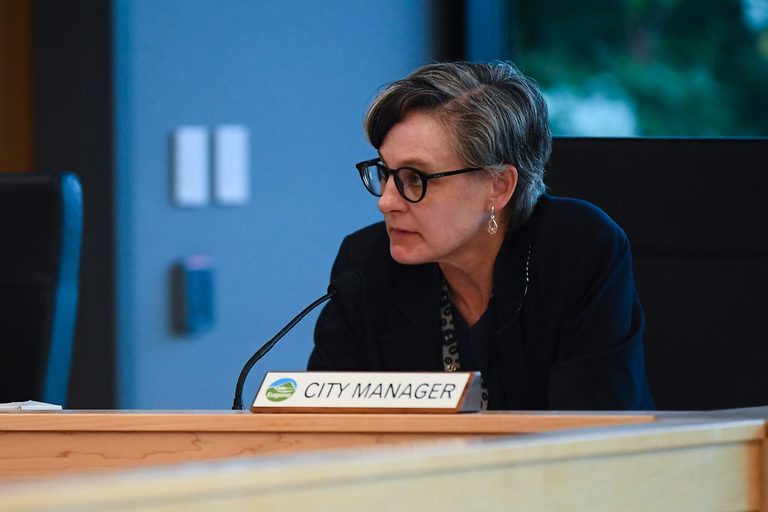
Five of the eight councilors voted to keep the TOPA initiative moving, pushing back against City Manager Jenny Haruyama’s suggestion to abandon the effort. The council ran out of its allotted time and tabled the discussion, but a follow‑up meeting has yet to be scheduled, city spokesperson Elle O’Casey said.
Staff raises cost concerns
City staff warned that TOPA may not be the most efficient use of limited municipal funds. Rental Housing Analyst Amy Cameron noted that the city currently spends about $17,000 per unit to preserve existing affordable rentals and roughly $8,000 per unit to build new affordable or shared‑equity housing. By contrast, advocates estimate TOPA would require about $50,000 in city subsidies for each unit.
“TOPA is one policy tool that, when matched with sufficient funding, can improve housing affordability and stability,” Cameron said. “However, given the limited city resources, our exploration indicates that existing programs are the most reliable, consistent way to accomplish the goals of rehabilitating and increasing production of affordable housing for low‑ to moderate‑income households.”
Councilors voice mixed opinions
Councilor Alan Zelenka criticized the staff briefing for emphasizing a “lengthy list of problems” while downplaying potential benefits. Councilor Jennifer Yeh questioned why staff omitted any discussion of how to advance the policy, calling the omission “odd.” She added, “Waiting for Salem is not a neutral position. That’s choosing to do nothing, right? I don’t think that’s the values we have here.”
Other members, such as Councilor Eliza Kashinsky and Councilor Lyndsie Leech, urged a more experimental approach, suggesting the council explore smaller steps rather than a costly, sweeping program. “We need to think about what sort of more experimental steps we can take, and not let the perfect be the enemy of the good,” Kashinsky said.
Councilors Randy Groves and Mike Clark expressed caution. Groves noted, “I love the idea of taking some kind of action that moves us forward, but I want to make sure with limited resources we are cognizant of the downstream effects if we start pulling money from programs that are actually proven to produce good work.”
Next steps and cost estimates
If the council decides to pursue TOPA, it will need to hire a consultant to develop a detailed proposal, an effort estimated at $75,000‑$100,000 and expected to take six to eight months. The council would then require another six to eight months to debate the proposal, followed by a year to a year‑and‑a‑half for implementation.
Councilors have asked staff to explore ways to reduce these costs, perhaps by focusing on targeted measures that lower barriers to homeownership for renters rather than a comprehensive program.
Broader context
TOPA‑type policies have been adopted in cities such as Washington, D.C., San Francisco and Philadelphia, as well as in Oregon’s manufactured‑home parks. Proponents argue that giving renters a first‑right of purchase can keep families in their neighborhoods and expand homeownership among low‑ and moderate‑income households.
Opponents worry that the policy could divert scarce local resources away from proven affordable‑housing initiatives. The council’s ongoing deliberations reflect a broader search for solutions that balance fiscal responsibility with the need for more stable, affordable housing in Eugene.
Original reporting: Homepage – Lookout Eugene-Springfield — read the source article.