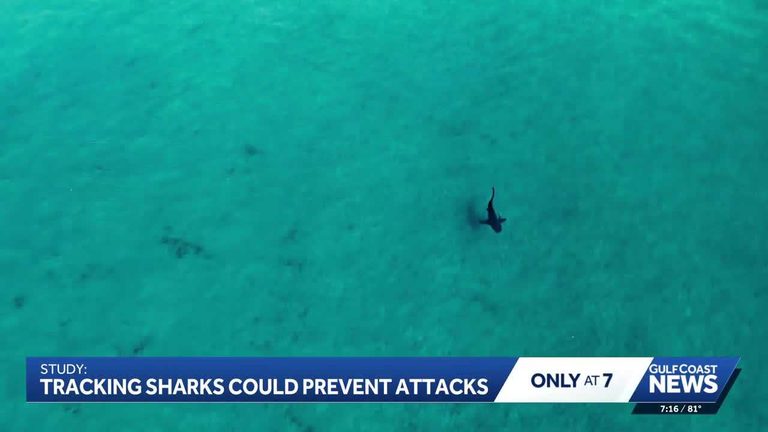
Researchers from Friends of Rookery Bay are conducting hands‑on shark tagging projects on Florida’s Gulf Coast to better understand the habits of these marine predators. The effort, which began with a young bull shark, now includes more advanced procedures such as implanting acoustic transmitters inside lemon sharks.
Tagging process and technology
When the team first caught a bull shark, they noted a distinctive umbilical scar indicating the animal was a young male of the year. After confirming its health, the scientists placed a simple external tag on the shark’s fin. Later, a lemon shark underwent a more involved “shark surgery,” where researchers made a small incision in the belly and inserted an acoustic transmitter. The transmitter emits a unique signal that can be picked up by a network of underwater receivers placed throughout the bays.
“If this tagged shark swims within range of those receivers and the receivers hear the right signal, they’ll record the time of day and which tag they heard,” a researcher explained. This data allows scientists to map shark movements over weeks and months, revealing patterns such as feeding grounds, migration routes, and seasonal habitat use.
Shark‑bite archive and trends
Gavin Naylor, director of the Florida Program for Shark Research at the University of Florida, oversees an archive of shark‑bite incidents that dates back 60 years to a Navy‑initiated record‑keeping effort. The archive now contains about 7,000 documented bites. By digitizing and analyzing these reports, researchers can identify trends that were previously invisible.
“We can start to see trends that we wouldn’t be able to before,” Naylor said. While shark bites remain rare, the archive helps quantify their economic impact and informs public‑safety messaging.
Local impact and personal stories
Local governments do not maintain separate shark‑bite databases, and state and federal agencies typically do not investigate each incident. Naylor noted that, “In general, the counties, the state government, and the federal government don’t investigate it. It does have an economic impact, but only from time to time. In terms of injuries to people, it’s a very minor problem.”
One survivor, 11‑year‑old Leah Lendel, recounted a near‑fatal encounter off Boca Grande last June. “I felt something bite my hand. I started screaming, my mom screamed, and then I swung my hand out. It was all blood,” she said. After a full recovery, Lendel expressed a desire to study sharks, hoping to learn why they sometimes bite and how to prevent future incidents.
Why the research matters
The project is driven by scientific curiosity and a desire to protect both humans and sharks. “We are curiosity‑driven. We want to understand what makes these animals tick,” Naylor said. By learning more about shark behavior, researchers hope to develop strategies that reduce human‑shark conflicts while preserving the ecological role of sharks in coastal waters.
For now, the acoustic tagging network continues to expand, offering a clearer picture of shark movements along Florida’s Gulf Coast and providing valuable data for marine biologists, policymakers, and the public.
Original reporting: KOAT Albuquerque — read the source article.