Florida’s public campaign financing program, a constitutional amendment approved in 1992, is seeing a dramatic decline as the 2026 election cycle unfolds. Through Oct. 2, candidates have received just $4,063,615 in matching funds, a 68% drop from the $13,015,149 allocated in the 2022 midterms.
Funding numbers show steep reduction
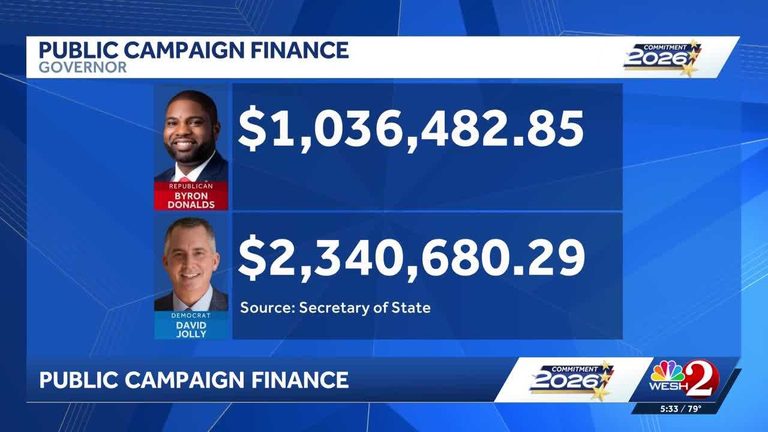
Governor‑candidate Republican Byron Donalds has taken in $1,036,482.85, while Democrat David Jolly has received $2,340,680.29 from the public fund. In the attorney‑general race, Democrat José Javier Rodríguez has collected about $318,957 and incumbent Republican James Uthmeier $167,711. No candidates for agriculture commissioner or chief financial officer have requested any public money this cycle.
Experts say the original purpose is fading
University of Central Florida political science professor Dr. Aubrey Jewett noted that the system’s intent—to give under‑funded candidates a chance against wealthy opponents—has largely been eroded. He recalled former Republican Governor Jeb Bush’s description of the program as “welfare for politicians.” When asked if he agreed, Dr. Jewett responded, “It does seem like the original purpose for public campaign finance dollars has kind of gone by the wayside.” He added that many statewide candidates now rely on political action committees (PACs) that can accept unlimited contributions, bypassing the matching‑fund limits.
Voters voice strong opposition
Despite two statewide votes—2010 and 2024—rejecting amendments to eliminate the program, many Floridians we spoke with say the funding should end. A woman near the Orange County Supervisor of Elections office said, “Our tax money should go to services that can be provided to folks in need.” A man casting a vote‑by‑mail ballot called the situation “a tragedy,” adding, “We are being cheated out of the funds that we have earned over the 30 years.” Another voter bluntly stated, “I don’t think our tax dollars should be used for that. No. I don’t care who it is.”
Legislative history and future outlook
The public financing system was first approved by the Florida Legislature in 1986 and later enshrined in the state constitution by a 1992 amendment. While past attempts to repeal the program have failed, the sharp decline in disbursements and growing voter criticism suggest the issue will remain a point of contention in upcoming legislative sessions.
What’s next for the program?
Dr. Jewett warned that the drop in funding is likely to continue, noting, “It wouldn’t shock me if we saw less money going to candidates from this public campaign finance fund because the only money that is matched is money that you actually raised through your smaller campaign account.” As the election approaches, candidates and lawmakers will need to address whether the public financing model still serves Florida’s voters or whether it should be reformed or repealed entirely.
Original reporting: WESH Orlando — read the source article.