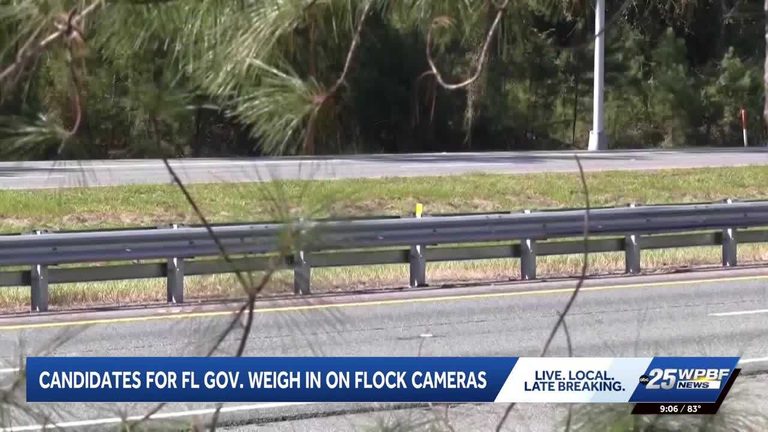
At a packed town‑hall in Delray Beach, Republican gubernatorial contender Byron Donalds warned that the expanding use of Flock cameras threatens Floridians’ privacy. “The privacy of our people is not up for debate,” Donalds told the audience, adding that law‑enforcement should have the tools it needs, but that “when you see some of these abuses, you’ve got to pull the plug.”
Donald’s Democratic opponent, former U.S. Representative David Jolly, took a different tack. In a post on X, Jolly urged Governor Ron DeSantis to convene a special legislative session to place the technology into law, arguing that clear rules would protect both public safety and civil liberties.
Local actions shape the statewide conversation
The debate gained fresh urgency after St. Lucie County commissioners voted earlier this week to remove Flock cameras and other automated license‑plate readers from county roads and to pause new permits. The county sheriff’s office said it will comply with the state order and tighten its own rules for using the systems.
Flock Safety, the company that manufactures the cameras, maintains that access to the footage is limited to the agency that operates the device, with all searches logged and automatically deleted after 30 days. The firm argues that the technology helps officers quickly locate stolen vehicles and apprehend suspects, while preserving privacy safeguards.
Candidate positions reflect broader partisan lines
Donalds’ stance aligns with a growing coalition of privacy advocates and some local officials who fear unchecked surveillance could erode constitutional protections. He emphasized the need for strict oversight and transparent policies before expanding the program statewide.
Jolly, on the other hand, highlighted the potential benefits of the cameras for reducing crime and speeding up investigations. By urging Governor DeSantis to act, he seeks to provide a legislative framework that would standardize usage and address privacy concerns through law rather than ad‑hoc local bans.
What this means for Floridians
Both candidates recognize that the issue sits at the intersection of public safety, technology, and individual liberty—core concerns for families and faith‑based communities across the state. As the gubernatorial race heats up, voters can expect the Flock camera debate to feature prominently in upcoming campaign events and policy forums.
For residents of St. Lucie County and other Florida locales, the outcome of this debate could determine whether their neighborhoods see more surveillance equipment on roadways or stricter privacy protections that limit data collection. The conversation also underscores the importance of local officials, like county commissioners, in shaping how state‑wide policies are implemented on the ground.
As the campaign season progresses, both Donalds and Jolly are likely to refine their positions based on feedback from constituents, law‑enforcement leaders, and privacy experts. The ultimate decision—whether to expand, limit, or regulate Flock cameras—will hinge on how Florida voters balance the desire for safer streets with the constitutional right to privacy.
Original reporting: WPBF West Palm Beach — read the source article.